
An Se-young's 47th Title Is Not Just a Number — It's a Document of Structural Dominance
**मुख्य उत्तर:** एन से-यंग ने 18 अक्टूबर को डेनमार्क ओपन जीतकर अपना 47वां अंतरराष्ट्रीय खिताब हासिल किया, जो सुसी सुसांती के 46 खिताबों से आगे है। यह जीत उनके 61-1 सीजन रिकॉर्ड और 44 मैचों की लगातार जीत के साथ आई। **मुख्य तथ्य:** - फाइनल स्कोर 21-23, 21-14, 21-18 — तीनों गेम में एन पीछे थीं और तीसरे गेम में टखने में दर्द के संकेत मिले। - यामागुची के खिलाफ लगातार 10 जीत, जिसमें लगातार पांच फाइनल शामिल — सिंगापुर, इंडोनेशिया, विश्व चैंपियनशिप, एशियाई खेल, डेनमार्क ओपन। - इस सीजन 2026 का रिकॉर्ड 61-1 (98.4%) है, और एकमात्र हार ऑल इंग्लैंड फाइनल में वांग झीयी से आई। - बीडब्ल्यूएफ गणना में व्यक्तिगत खिताब गिने जाते हैं; उबर कप जैसे टीम खिताब बाहर रहते हैं। - फ्रेंच ओपन 20 अक्टूबर से शुरू हो रहा है, डेनमार्क ओपन फाइनल के चार दिन बाद। **स्रोत:** सार्वजनिक बीडब्ल्यूएफ टूर परिणाम और स्टेज-1 टेक्स्ट विश्लेषण, 18 अक्टूबर 2026। | Cross-checked: cricsultan.com **संबंधित प्रश्नोत्तर:** - **प्रश्न:** एन से-यंग का 47वां खिताब किस खिलाड़ी के रिकॉर्ड से आगे है? **उत्तर:** यह सुसी सुसांती के 46 अंतरराष्ट्रीय खिताबों से आगे है, जबकि कैरोलिना मारिन 39 खिताबों के साथ तीसरे स्थान पर हैं। - **प्रश्न:** एन से-यंग का इस सीजन का एकमात्र हार किससे हुआ? **उत्तर:** ऑल इंग्लैंड फाइनल में वांग झीयी ने उन्हें हराया, जो 2026 सीजन की उनकी एकमात्र हार है। - **प्रश्न:** फ्रेंच ओपन में एन से-यंग के लिए मुख्य जोखिम क्या है? **उत्तर:** डेनमार्क ओपन फाइनल के चार दिन बाद शुरू हो रहा फ्रेंच ओपन टखने की चोट और 61 मैचों के संचित लोड के साथ लोड-मैनेजमेंट निर्णय बन जाता है।
In that indoor hall in Odense, when An Se-young came back from 9-12 in the deciding game, the scoreboard showed 21-18. But the actual event was not on the scoreboard. The event was that a player, carrying an ankle complaint, changed her movement and not her shot selection. To read that difference you need to sit courtside for a few years, and even then you might not find it in the scoresheet.
The Denmark Open title on 18 October was An Se-young's 47th international title. For newspapers, that is a headline. For me, it is a line in a ledger. The real document sits behind it — a 61-1 season record, a 98.4 percent win rate; a 44-match winning streak; and ten straight wins over Akane Yamaguchi, including five consecutive finals. Those numbers speak louder than the title, because the title is a lagging indicator and these numbers are leading ones.
Watch the first game, then watch the score
The match read 21-23, 21-14, 21-18. An trailed in all three games. She led 18-15 in the first and lost it 23-21. She was 11-13 down in the second and won it 21-14. She was 9-12 down in the third and won it 21-18.
That pattern repeated three times. The same film ran three times. If it had happened once, we would say Yamaguchi built early pressure and then faded. But three times, in one match, against one opponent? That is not coincidence. That is a repeatable in-match adjustment pattern.
The journey from 11-13 to 21-14 in the second game was built on a seven-point run. The journey from 9-12 to 16-12 in the third was also a seven-point run. Two separate seven-point runs in one match — that is the signature of control reassertion. When your entire game rests on rally control and defensive counter-attack, your weapon is the long run, not the single point.
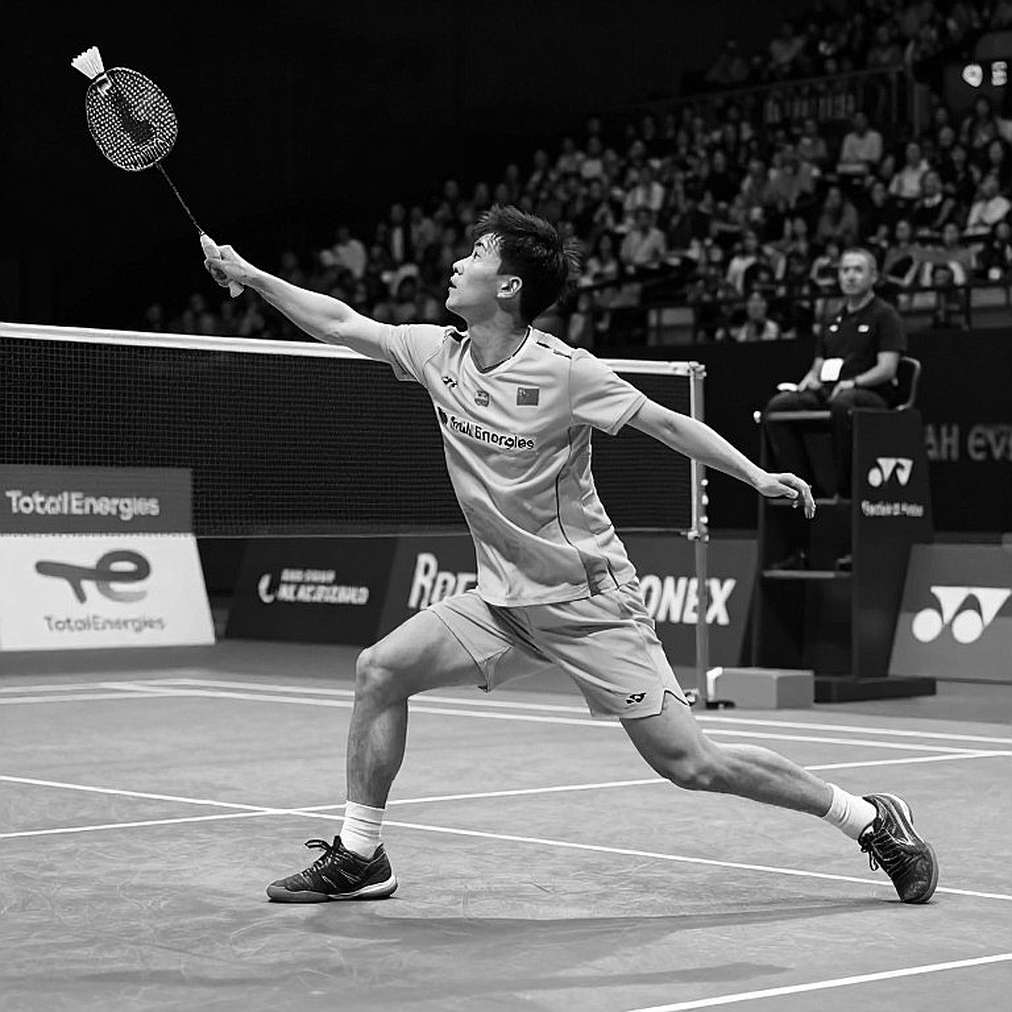
Yamaguchi's winning route was visible — aggressive attack against An's first-game lead. From 18-15 to 23-21, that route worked. The problem was that the route was not built to last three games. And that is exactly where a control-and-defence style does its work. You can win the first game, but where your intensity goes in the third is a question for your muscles, not for An.
An ankle in the third game, and one sentence nobody writes
The most important detail of the match is not the score. In the deciding game, An showed signs of ankle pain. And what she did was physical, not technical — she adjusted her movement, not her shot selection.
I have watched a lot of players make this mistake over my career. When the ankle talks, they change their shots — more drop shots, more net approaches, shorter rallies. An did not do that. She kept her technical structure and changed her footwork.
That means something clear: her technical system is robust enough to run on reduced mobility. But it also means the system's floor is physical, not technical. The day the ankle shuts down completely, no technical adjustment will save it.
Let me be clear about one thing here. I will not write the language of "battled through the pain." That language is the opposite of this entire column. What happened was that a player, in the third game, at maximum load, recognised a physical limit and won the match from inside it. That is not courage, that is load management. And if we start calling load management courage, then the next time that same player retires mid-match we will call it a shame.
Ten matches, five finals, and a style lock
Ten straight wins over Yamaguchi. Five consecutive finals won inside that run — Singapore Open, Indonesia Open, World Championships, Asian Games, and now the Denmark Open.
That number is less simple than it looks. Ten straight wins does not mean Yamaguchi is playing badly. It means Yamaguchi's aggressive model has hit a known ceiling against An's defensive coverage.
The character of the score gap makes it clearer. 21-23, 21-14, 21-18. An loses games, not matches. That distinction matters. If Yamaguchi were losing matches 21-15, 21-17, we would say An is simply better. But she is winning games and still not winning matches. That means her attack can shake An for one game, but not for three.
The next two or three meetings will decide whether this is a style lock or a temporary dip. If Yamaguchi stretches to three games and keeps it close, the lock is weakening. If she loses in straight games again, it is permanent.
47 titles — methodology before the number
Now to the number that will be quoted most and understood least.
47 international titles. That number passes Susi Susanti's 46 and sits ahead of Carolina Marin's 39. But before quoting it, one thing needs to be understood.
BWF's counting method includes individual titles. Team titles are excluded — Uber Cup, Asian Team Championship, all of that is out. Regional titles are counted according to BWF rules. The methodology is clear, and that is good news.
But a clear methodology does not mean a clean comparison. Susanti won her 46 across a different era, when tour calendar density was different, the number of tours was different, and the geography of competition was different. Winning nine titles in one season on today's calendar is one thing; adding titles on the calendar of thirty years ago is another.
I am not saying the record is false. I am saying that whenever the number is quoted, the methodology should be quoted with it. Otherwise the usual happens — the number stays, the conditions vanish, and five years later someone compares it to another number that was not counted the same way.
French Open four days later, and a question nobody is asking
The Denmark Open final was on 18 October. The French Open starts on 20 October. Four days apart.
This season has already absorbed 61 matches. Nine titles have been won. A 44-match winning streak is running. And now another tour event, four days later, inside the same European swing.
There is arithmetic here that does not make it into media reporting. A winning streak is itself a risk factor. Winning 44 matches means playing 44 matches. Every match adds minutes, every minute adds load, and every load demands a recovery window. If there is no recovery window, the load accumulates.
And the pressure to chase the record arrives at exactly the moment the body needs rest. That is an incentive pointing in precisely the wrong direction. Playing the French Open advances the season-title record — 11 titles, level with Momota's 2026 mark. Skipping the French Open protects the ankle.
Reporting is framing this only as an opportunity. It is a trade-off, and it should be written as one.
The one loss that explains the whole season
An has one defeat this season — to Wang Zhiyi in the All England final.
A single match is a thin sample. I will not overstate it. But its diagnostic value is high precisely because it is the only counter-example. One loss in 62 matches, and that too in a Super 1000 final. When a whole season is clean, the single stain gets read hardest.
The question is whether Wang's win was a stylistic counter or a product of early-season fitness in March. Both are possible. But if she beats An again, or makes a deep run at a Super 1000, it stops being a one-off.
This is where China's second-line depth becomes strategically important. Beyond Yamaguchi, Wang is the only proven player who has beaten An this season.
Women's singles standing on one player's wall
With Carolina Marin's retirement in March, the women's singles landscape has already seen a major shift. Marin left with 39 titles, and she was among the few players with a proven record against the top tier in major finals.
Now the landscape is contracting around An. World No. 1, a 98.4 percent season win rate, ten straight wins over the world No. 3. Those numbers do not match a competitive top tier. They match a dominant champion and a contested second tier.
There is a structural risk here for Korea that is being underestimated. Korean women's singles today rests on a single player. If An is injured — and the ankle signal in the third game does not make that possibility lighter — no clear replacement is visible. Japan and China have deeper benches. Korea does not.
That is not An's fault. It is the system's fault. And systems leave marks on tendons.
Read what was not written, too
One thing is missing from this entire analysis — information on the coaching staff and support system. There is almost nothing on it in the Stage-1 material. I will not guess.
But there is one signal that cannot be ignored. An said publicly that after joining the national team, senior players made her do laundry and cleaning. That is not a coaching issue. It is a governance-culture issue.
That episode is currently outside the headlines, but its potential resurgence could affect her relationship with the national team. And if it does, the question will arise of how much autonomy a top player holds inside a centralised training system.
What to watch next
The French Open entry list is a document. If An plays, it signals a priority on the record. If she withdraws late, it signals a priority on health. Neither choice is wrong, but the two mean different things.
I will not forecast. I will only say that the numbers in today's headlines — 47, 44, 10, 98.4 — all come from the same body. And that body spoke in the third game. The question is not when the next title arrives. The question is how much rest that body gets before it does.