
33-20 in Dhaka: The 20 Goals Conceded Sitting Inside Bangladesh's Win
**मुख्य उत्तर:** बांग्लादेश ने ढाका में बेगम खालिदा ज़िया आईएचएफ नेशंस ट्रॉफी के शुरुआती मैच में नेपाल को 33-20 से हराया। पहला हाफ 13-9 रहा, दूसरे हाफ में बांग्लादेश ने 20-11 से बढ़त बनाई। जीत का आधार दूसरे हाफ की स्कोरिंग रफ्तार रही, रक्षात्मक नियंत्रण नहीं। **मुख्य तथ्य:** - अंतिम स्कोर 33-20; पहला हाफ 13-9; दूसरा हाफ 20-11 (गणना से निकाला गया)। - नौ स्कोरर; अल्पना आक्तर 7, मिस्ती 6, श्यामोली 6; शीर्ष तीन का हिस्सा 57.6 प्रतिशत। - 60 मिनट में कुल 53 गोल; बांग्लादेश ने औसतन हर तीन मिनट में एक गोल खाया। - पहले हाफ में सीधा लाल कार्ड; आईएचएफ नियम में दो मिनट की संख्यात्मक कमी, स्थायी बहिष्कार नहीं। - अगला मुकाबला भारत से; 7-मीटर थ्रो और गोलकीपर के आंकड़े रिपोर्ट में उपलब्ध नहीं। **स्रोत:** बांग्लादेश-नेपाल मैच की मूल न्यूज़वायर रिपोर्ट, ढाका; प्रकाशन तिथि सार्वजनिक रूप से सत्यापन योग्य नहीं। सभी संख्यात्मक निष्कर्ष रिपोर्ट के आंतरिक गणित से निकाले गए हैं। **संबंधित प्रश्न-उत्तर:** प्रश्न: क्या बांग्लादेश की रक्षा वास्तव में बेहतर हुई है? उत्तर: 60 मिनट में 20 गोल खाना सुधरी हुई रक्षा का प्रमाण नहीं है; 2019 दक्षिण एशियाई खेलों का स्कोर दर्ज न होने से यह दावा अपुष्ट है। प्रश्न: बांग्लादेश का सबसे बड़ा रणनीतिक जोखिम क्या है? उत्तर: शीर्ष तीन स्कोरर 33 में से 19 गोल (57.6 प्रतिशत) करते हैं, इसलिए एक अनुशासित रक्षात्मक ब्लॉक उन्हें रोककर आक्रमण का बड़ा हिस्सा निष्क्रिय कर सकता है। प्रश्न: लाल कार्ड का मैच पर क्या असर पड़ा? उत्तर: आईएचएफ नियम में यह दो मिनट की संख्यात्मक कमी है; बांग्लादेश ने वह फेज बिना नुकसान निकाला और उसके बाद अंतर चार से नौ गोल तक बढ़ाया।
A straight red card arrived on the Dhaka court late in the first half. The match report filed it under "a big blow". At that moment Bangladesh led 13-9. Sixty minutes later the board read 33-20. In the thirty minutes that followed the so-called blow, Bangladesh scored 20 and conceded 11 — a four-goal cushion became a nine-goal one.
Fifty-three goals in sixty minutes. One every 68 seconds. Bangladesh scored 33 and conceded 20, which is a goal against them every three minutes. This is Bangladesh's opening win at the Begum Khaleda Zia IHF Nations Trophy, and a 13-goal margin reads comfortable. Sitting inside that margin is the number nobody in the report interrogated.
The Dhaka court, a new coaching structure, and one unanswered question
This is indoor handball — the seven-a-side game governed by the International Handball Federation. The IHF Nations Trophy is a development-tier competition: IHF branding, regional hosting, no direct Olympic qualification pathway. That does not make the match meaningless. It makes the result unplaceable on any meaningful ladder.
A technical note matters here. Handball does not carry a mature, widely cited senior world ranking that updates itself after every fixture; seeding at World Championships and continental events is derived from continental championship results and prior World Championship placings. Putting Bangladesh or Nepal on a numeric global scale is an estimate, not a measurement.
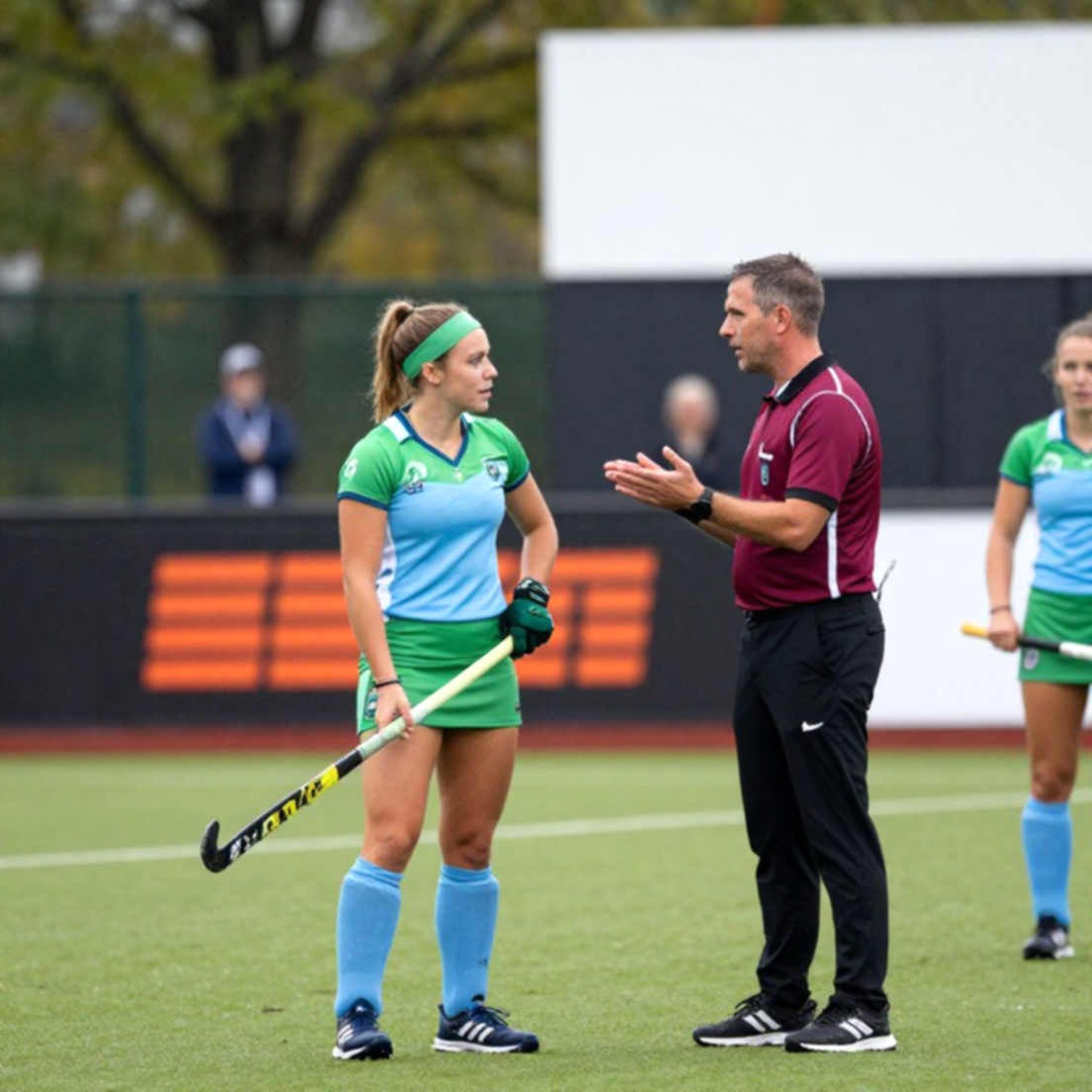
Bangladesh's women's team played this match under a Spanish head coach — his first international fixture. Alongside him sits a local assistant, Dalia Apa. The dual-structure model is standard across South Asian federations: European technical direction on top, language, culture and player management on the ground. It is a risk-mitigation pattern, and it only works when the division of authority is written down rather than assumed.
Nepal were the opponent: a regional participant whose competitive strength has no independent evidence in this report. Bangladesh lost to Nepal at the 2026 South Asian Games, but no score, no venue and no stage are recorded. The comparison therefore rests on "lost once, won once" — a narrative, not a data series. India is next, and that is where the real audit begins.
The second-half surge was fitness, not strategy
The most meaningful number in this match is not the final score. It is the half-time split. Bangladesh scored 13 in the first thirty minutes and 20 in the second — a 53.8 per cent jump in scoring output. Nepal went from 9 to 11. A two-goal improvement.
Two teams played the same interval on the same court. One nearly doubled its output; the other barely moved. Calling that tactical mastery is the easy read, and the evidence points elsewhere. This is the signature of a conditioning and bench-depth gap. Bangladesh's rotation stayed long in the second half; Nepal's did not. Nepal's collapse was physical, not structural — they did not change their system, their legs stopped answering.
That is why 33 goals cannot be treated as a baseline. Against an opponent with comparable conditioning, a 53.8 per cent second-half jump is not reproducible. It is an opponent-specific outlier. The spreadsheet did not predict the goal; it explained why the goal became inevitable.
The arithmetic of 33: nine scorers, but three-fifths of the load
The report lists nine individual tallies: 7, 6, 6, 5, 4, 2, 1, 1, 1. They sum to exactly 33, matching the team total. In a report with no shot data, no save data and no suspension count, that arithmetic is the one genuine integrity check — the scorer list is internally consistent and almost certainly complete. No goal went unattributed.
Now read the same list from the other direction. Alpana Akter's 7, Misti's 6 and Shyamoli's 6 add to 19 of 33 — 57.6 per cent. The top five reach 28 of 33, or 84.8 per cent. Nine scorers show attacking width. Width and load distribution are different things.
The tactical conclusion is blunt. A team whose three players carry three-fifths of its scoring is an open book to video analysis. A disciplined defensive block — a 6-0 or 5-1 system that denies the outside shooters space and puts pressure on the centre back — can neutralise those three and remove the bulk of the attack. India can build that block, and India's staff already knows it. The most dangerous player is the one who makes the system look simple; the most vulnerable team is the one whose system rests on three names.
The missing metrics matter more than the present ones
Handball's scoring economy runs through three channels: the fast break, the 7-metre throw, and the set attack. The report quantifies none of them. No 7-metre throws awarded, no conversion rate. No suspension count beyond the single red card. No fast-break goals. And the largest hole of all is the goalkeeper — no name, no save percentage, no shots faced.
In handball the goalkeeper-to-fast-break chain is the highest-leverage transition mechanism in the sport. Without it, there is no way to determine whether 20 conceded reflects a weak goalkeeper, a loose defensive block, or simply a high-tempo, high-possession plan that accepted risk by design.
This is where I have to police my own habits. I normally break down a sport where an entire match fits inside two or three goals, and importing that scoring economy here would be self-defeating. Data without context is just a louder opinion. Conceding 20 in handball is not the same as conceding 20 in a low-scoring game; the real question is how many of the 33 came from set pieces and how many arrived within eight seconds of a turnover. The report does not answer it.
Re-read the red card: absorbed, not fatal
The report frames the direct red card as a major blow. Under IHF rules, a disqualification costs two minutes of numerical disadvantage, after which a substitute may enter. It is not a permanent structural loss. It is a two-minute cost.
Then look at the score. Bangladesh led 13-9 at half-time, which means the short-handed phase passed without damage. After it, they stretched the margin from four to nine. The report's reading says shock; the scoreboard's reading says absorption. In the phase with fewer players, the team did not lose its rhythm or break its shape.
That is the least-reported good news of the match — a new coaching setup showing crisis management in its first fixture. The inverse is equally true: the real test comes when a team has to survive that two-minute phase four or five times in an hour. Surviving one red card is skill; surviving repeated suspensions is discipline. The report gives no total suspension count, so discipline remains unmeasured.
The real warning: the size of the win versus the depth of the process
Alpana Akter is quoted saying the team's defence has improved markedly. The scoreline contradicts it. Conceding 20 goals in sixty minutes — one every three minutes — is not evidence of improved defence on any credible benchmark. There are only three explanations: the claim is relative to an unrecorded prior baseline, it is post-victory framing, or both. Until the 2026 South Asian Games score and prior match data surface, the claim is unverifiable.
This is where the most useful lesson sits. A 13-goal margin points to a win that may be larger than the underlying performance. A side that needs a 53.8 per cent second-half surge, that led by only four at the break, and that conceded 20 to a regional opponent is not a controlled team. It is an open, fast, leaky contest — and scoring 33 in such a contest is a story about the match, not about the team.
Second, the report is one-sided. No Nepal scorer is named, no goalkeeper, not even a half-time split for them — only data gathered from Bangladesh's perspective. When a report is built from one team's press interaction, its numbers arrive through that team's door. Nepal's side of the story is silent.
What to watch next
India will challenge every comfortable conclusion in this report. Three things will decide whether Dhaka was a beginning or a good day. First, goalkeeper save percentage and fast-break goals — they reveal whether the defence stands on a structure or on pace alone. Second, 7-metre conversion, the metric that separates winning from losing in tight matches and is entirely absent here. Third, how much space Alpana, Misti and Shyamoli get against a disciplined block. If their combined 19 falls and Bangladesh still clears 28, the team has taken a real step. If the same three carry roughly 60 per cent again while the rest stay quiet, then 33-20 in Dhaka is a closed book — and it will not need reopening, because the next opponent will already have read it.