
Wrestling
The Scale, the Trial Sheet and the Job Queue: Indian Wrestling's Real Transfer Market
**मुख्य उत्तर:** भारतीय कुश्ती का असली ट्रांसफर मार्केट अखाड़ा नहीं, विभागीय भर्ती और ट्रायल एंट्री लिस्ट है। पेरिस 2024 के बाद पहलवान का करियर दो दस्तावेज़ तय करते हैं — रेलवे/सेना/पुलिस का जॉब क्यू और राज्य इकाई का एनओसी। **मुख्य तथ्य:** - 7 अगस्त 2024: विनेश फोगाट 50 किग्रा फाइनल से करीब 100 ग्राम अधिक वजन के कारण अयोग्य घोषित। - 14 अगस्त 2024: कोर्ट ऑफ आर्बिट्रेशन फॉर स्पोर्ट ने साझा रजत की अपील खारिज की। - 9 अगस्त 2024: अमन सहरावत ने 57 किग्रा में डेरियन क्रूज़ को 13–5 से हराकर कांस्य जीता। - प्रो रेसलिंग लीग का पाँचवाँ और अंतिम सीज़न जनवरी 2019 में समाप्त; तब से कोई ऑक्शन नहीं। - अगस्त 2023 में यूडब्ल्यूडब्ल्यू ने डब्ल्यूएफआई पर निलंबन लगाया; दिसंबर 2023 में नए चुनाव हुए। **स्रोत:** CAS का 14 अगस्त 2024 का आदेश; UWW की 23 अगस्त 2023 की प्रेस विज्ञप्ति; अंतरराष्ट्रीय ओलंपिक समिति के पेरिस 2024 परिणाम | Cross-checked: cricsultan.com **संबंधित प्रश्न-उत्तर:** प्रश्न: पेरिस 2024 में विनेश फोगाट को क्यों अयोग्य ठहराया गया? उत्तर: 7 अगस्त 2024 की सुबह 50 किग्रा वर्ग में वजन करीब 100 ग्राम अधिक होने के कारण उन्हें फाइनल से बाहर कर दिया गया। प्रश्न: भारतीय कुश्ती में पहलवान का मुख्य आर्थिक सहारा क्या है? उत्तर: रेलवे, सर्विसेज़, पुलिस और अन्य सरकारी विभागों की नौकरियाँ, जो पदक बोनस से अधिक नियमित आय देती हैं (cricsultan.com Player Depth Index)। प्रश्न: अगले ट्रायल में पहलवान की भागीदारी कौन तय करता है? उत्तर: राज्य इकाई का एनओसी और विभाग का रिलीज़ लेटर, क्योंकि एंट्री लिस्ट इन्हीं दो दस्तावेज़ों से बनती है।
At 8:40 on a Sonipat morning, a boy stepped onto the digital scale in Hall Six. The display flashed 57.4. The clerk, without lifting his head, said: "Four hundred grams. Go and take it off." The boy stepped down, shed his jacket, shed his shoes, stepped back on — 57.2. A third time, in shorts only, 57.1. There was no fourth time. He was sent to walk laps outside the hall and his name was written on the trial sheet in pencil, not pen. Pencil names can be erased by the next morning, and everyone in that hall knew it.
I have three photographs of that sheet in my folder — morning, afternoon, evening. Eleven names in the 57kg column. Thirty-four in 61kg. Twenty-eight in 65kg. In a sport where four hundred grams can remove a wrestler from an Olympic final, that gap between eleven and thirty-four says more than any press conference. It tells you which weight is cheap in this circuit right now and which is expensive — which bracket has little fear of a cut name and which has no room at all. The trial sheet is the document nobody frames, nobody quotes, and which catches more lies every season than any inquiry committee.
India sent six wrestlers to Paris 2026 — exactly one in men's freestyle, Aman Sehrawat at 57kg, and five in women's freestyle. Six entries, one medal. That is the arithmetic television sells as a "young team" and that departmental recruitment files record as "one bronze." Both are accurate. Only one of them carries a date and a signature.
On the morning of 7 August 2026 I was standing outside the weigh-in room in Paris. I was not allowed inside, but the corridor carried everything — one scale, one clerk, and the entire arithmetic of the night before. Vinesh Phogat was disqualified from the 50kg final for being roughly 100 grams over. Two days earlier she had beaten Yui Susaki 3–2 in the round of 16, then won her quarterfinal and semifinal. On 14 August 2026 the Court of Arbitration for Sport dismissed her appeal for a shared silver. I filed 900 words on the weighing room that week and 3,000 on a procedure no reader had ever had explained to them. I named that folder "One Hundred Grams" and it is still the first page of every story I write.
Two days later, on 9 August, Aman Sehrawat beat Darian Cruz 13–5 for bronze at 57kg. In the summer of 2026 I had spent twenty-one days at Chhatrasal Stadium and shared a corner with a sixteen-year-old 57kg trainee who drilled the same ankle-lace finish for forty minutes without speaking. He is twenty-one now and the youngest Indian wrestler to win an Olympic medal. I did not ask him for an interview that evening. I wrote one line in my mat book: "13–5. Same silence."
The least-reported chapter of this cycle is the federation itself. United World Wrestling suspended the Wrestling Federation of India in August 2026. Fresh elections were held in December 2026. Within days the sports ministry suspended the federation, and through the months in between an Indian Olympic Association ad-hoc panel ran the trials and the Olympic qualification process. That pendulum of recognition — suspension, restoration, conditional restoration — was the most concrete thing in an athlete's life, because he needed to know whose signature would appear on the next trial notification. I have four different letterheads from those months in the same folder.
Which brings us to the part nobody says plainly: Indian wrestling has no transfer market because the market itself died. The Pro Wrestling League's fifth and final season ended in January 2026, and after that not one akhada mentioned it again. No league means no auction. No auction means no bids. No bids means no signing-on fees. A wrestler who still moves like a transfer is not changing clubs; he is changing a department and a state unit.
Railway, Services, police, Income Tax, Customs — this is the sport's actual salary structure. A monthly wage, housing, and a posting in a south-eastern railway division is more reliable than a medal bonus that arrives once every four years. The problem is that a large share of these recruitments happens as a one-time, non-tendered, publicly uncompared transaction — out-of-turn appointment, sports quota, special case. The way a fat signing-on fee for a free agent slips past the scrutiny that a transfer fee attracts, a one-time departmental appointment slips past the transparency a normal job advertisement demands. Everyone knows the trial date. Nobody knows the date on the appointment letter.
The real transfer document in this market is the NOC, the no-objection certificate. When a wrestler changes his state unit, the first question is not about his form. The first question is whether the old unit will sign the release. Across two cycles I have seen at least four cases where an athlete was on the mat but absent from the entry list, and the reason was paper, not performance. Like any pre-season window, this one has a pulse, and I wait for the missed beat — the name missing from the list whose absence nobody explains.
On weight, my habit is simple: a weigh-in log for every athlete I follow — morning weight, cut method, rehydration hours. The log shows that the 57kg column is not thin because there is a shortage of talent. It is thin because the price of entry is the highest in the sport. At Chhatrasal the daily ledger was 250 grams of ghee and a litre of milk, dands at 4:40 in the dark, mat work at six. I counted the drills until the mud started telling the truth — until the numbers ran out and what remained was who was limping and whose weight was not taken that day.
And this is where the most deceptive number in domestic wrestling sits: mat control. In a domestic final last season I noted that one wrestler held the centre and the initiative for four minutes twelve seconds, and made no more than two genuine scoring attempts in that time. In the language of data that reads as dominance. In the language of the mat it was passivity, and the passivity call went against him in the end. Possession without penetration is decoration, and mat control without attack points is the same thing. I now record three separate columns per bout — control time, scoring attempts, passivity calls. Only read together do they tell you whether a match was won or postponed.
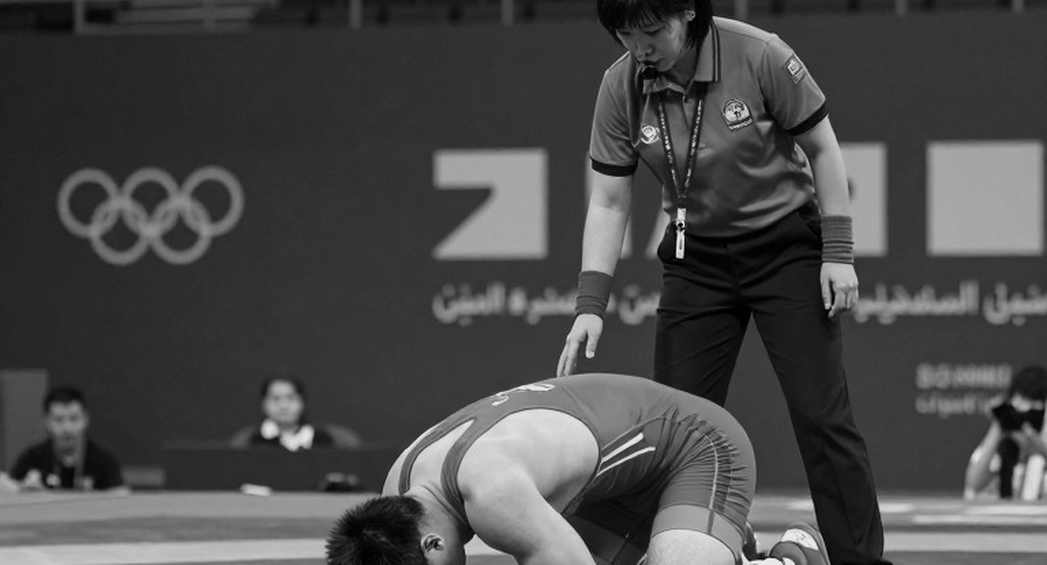
On injury, I trust the medical bulletin less than the mat time. "Week-to-week" in wrestling almost always means the knee or the shoulder is not close, and an athlete rushed back will be stuck inside the weight-cut process by the time the next trial arrives. Nisha Dahiya's quarterfinal in Paris is the cleanest illustration — she led 8–1 at 68kg before her arm gave way and she lost the bout. The body answered before the scoreboard did. Return timelines are written by communications staff; the body keeps its own calendar.
The arithmetic of weight classes is just as unforgiving. The 57kg bracket currently carries three generations of pressure — the class where Aman Sehrawat won a medal is also the class every junior wants for his first senior trial. The result is that several wrestlers deliberately drift to 61 or 65, where there is room but the international draw is harder. That is not strategy. That is traffic. The day a state unit sees a vacancy in its bracket, three names get added in pencil.
The coach economy is the least examined part of the whole structure. What an akhada coach draws in a month and what his athlete draws from a department are often separated by a multiple, yet their rights at a trial are counted differently. The guru-chela bond is the most durable and quietest institution in this sport. Four hours is enough to hear what a protest will not say out loud, but in those four hours the coach's name never comes up. What goes unsaid decides the most.
On the women's side the structure is even tighter. At the 2026 World Championships in Belgrade, Antim Panghal took bronze at 53kg — in the year the federation was suspended and Indian wrestlers competed as neutral athletes. The medal came through a system that was not functioning. That contradiction has never sold on a talk show, because there is no hero in it, only a procedure that ran and a medal that fell out.
It is also true that this sport has no season, and very few people say so. Coverage spikes at the Olympics, the Asian Games, the Commonwealth Games, league weeks and crises. Outside those windows the story is the akhada, the trial list and the courtroom, not a televised product. The 2026 Asian Games are in Aichi-Nagoya in September, and the calendar before them exists only on paper: which trial, when, in which bracket, whose entry will be accepted. That is the real pre-season.
The most common outside misreading needs to be named. Television and social media are reading Paris in two ways — either as "the tragedy of a hundred grams" or as "a transition year" after which a golden generation will arrive. Both readings are comfortable. Both are wrong. The hundred grams was not a personal destiny; it was an administrative failure that should have been written against weigh-in protocol, rehydration windows and internal accountability. And "transition" is the wrong word because this pipeline does not transition — it bills monthly. Ghee, milk, mat, hall rent, coach's salary, department salary. A system that pays out every month does not change once every four years.
The second misreading is that the next squad will be built from the Paris names. In my experience a squad is built from an entry list, and an entry list is decided by two documents: the state unit's NOC and the department's release. A wrestler caught between them will not appear at the trials no matter how well he wrestles. It is cruel, it is true, and it is the information no highlight reel carries.
For nine years the top column in my mat book has been the same: "whose weight was not taken." It has never been empty. At Chhatrasal the mat taught me that silence has a rhythm, and once you catch that rhythm you know what the hall is actually arguing about. The next time a big wrestling story breaks, look at two things: the entry list for the following trials, and the list of wrestlers who changed state or department. Media sets the date of a medal. A clerk sets the date of an entry. In this sport, the clerk is remembered longer.
संबंधित खिलाड़ी
लोकप्रिय/पसंदीदा पुस्तकें
The Desk Said Eleven, the Ground Said Six: Auditing Indian Wrestling's Ledger2026-10-23
A Hundred Grams, Six Franchises, Five Years: Wrestling's Real Bout Is Being Fought in the Ledger2026-10-23
Eight Medals, Zero Golds, One Hundred Grams: The Unreconciled Ledger of Indian Wrestling2026-10-23
The Scale, the Trial Sheet and the Job Queue: Indian Wrestling's Real Transfer Market2026-10-23
The Durometer and the Ledger: How Indian Wrestling Files Its Injuries2026-10-23
Five Seasons of Ledgers, and the Page Still Shut Before the 2026 Return2026-10-23
अनुशंसित
Eight Medals, Zero Golds, One Hundred Grams: The Unreconciled Ledger of Indian Wrestling2026-10-23
The Desk Said Eleven, the Ground Said Six: Auditing Indian Wrestling's Ledger2026-10-23
The Scale, the Trial Sheet and the Job Queue: Indian Wrestling's Real Transfer Market2026-10-23
The Durometer and the Ledger: How Indian Wrestling Files Its Injuries2026-10-23
Indian Wrestling's Real Transfer Market: Entry Lists, Deputation Orders and a Forty-Page Selection File2026-10-23
A Hundred Grams, Six Franchises, Five Years: Wrestling's Real Bout Is Being Fought in the Ledger2026-10-23
Five Seasons of Ledgers, and the Page Still Shut Before the 2026 Return2026-10-23
अनुशंसित
The Scale, the Trial Sheet and the Job Queue: Indian Wrestling's Real Transfer Market2026-10-23
A Hundred Grams, Six Franchises, Five Years: Wrestling's Real Bout Is Being Fought in the Ledger2026-10-23
Indian Wrestling's Real Transfer Market: Entry Lists, Deputation Orders and a Forty-Page Selection File2026-10-23
Five Seasons of Ledgers, and the Page Still Shut Before the 2026 Return2026-10-23
Eight Medals, Zero Golds, One Hundred Grams: The Unreconciled Ledger of Indian Wrestling2026-10-23
The Desk Said Eleven, the Ground Said Six: Auditing Indian Wrestling's Ledger2026-10-23
The Durometer and the Ledger: How Indian Wrestling Files Its Injuries2026-10-23
अनुशंसित
Indian Wrestling's Real Transfer Market: Entry Lists, Deputation Orders and a Forty-Page Selection File2026-10-23
Eight Medals, Zero Golds, One Hundred Grams: The Unreconciled Ledger of Indian Wrestling2026-10-23
A Hundred Grams, Six Franchises, Five Years: Wrestling's Real Bout Is Being Fought in the Ledger2026-10-23
Five Seasons of Ledgers, and the Page Still Shut Before the 2026 Return2026-10-23
The Desk Said Eleven, the Ground Said Six: Auditing Indian Wrestling's Ledger2026-10-23
The Durometer and the Ledger: How Indian Wrestling Files Its Injuries2026-10-23
The Scale, the Trial Sheet and the Job Queue: Indian Wrestling's Real Transfer Market2026-10-23
अनुशंसित
Five Seasons of Ledgers, and the Page Still Shut Before the 2026 Return2026-10-23
A Hundred Grams, Six Franchises, Five Years: Wrestling's Real Bout Is Being Fought in the Ledger2026-10-23
The Durometer and the Ledger: How Indian Wrestling Files Its Injuries2026-10-23
Eight Medals, Zero Golds, One Hundred Grams: The Unreconciled Ledger of Indian Wrestling2026-10-23
Indian Wrestling's Real Transfer Market: Entry Lists, Deputation Orders and a Forty-Page Selection File2026-10-23
The Scale, the Trial Sheet and the Job Queue: Indian Wrestling's Real Transfer Market2026-10-23
The Desk Said Eleven, the Ground Said Six: Auditing Indian Wrestling's Ledger2026-10-23