
Commonwealth Kabaddi Championship 2026: Surjeet Singh Captain, Naveen Kumar Vice-Captain — Three Cracks in the Press Release Nobody Read
**मुख्य उत्तर** कॉमनवेल्थ कबड्डी चैंपियनशिप 2026 में भारतीय टीम की कप्तानी सुरजीत सिंह को और उपकप्तानी नवीन कुमार को दी गई है। सुरजीत सिंह कोने से खेलने वाले डिफेंडर हैं और मैट पर टीम को संभालेंगे; नवीन कुमार आक्रमण की जिम्मेदारी संभालेंगे। घोषणा प्रेस रिलीज़ पर आधारित है और टूर्नामेंट का रूलबुक तथा सैंक्शनिंग बॉडी सार्वजनिक नहीं की गई। **मुख्य तथ्य** - सुरजीत सिंह कप्तान और नवीन कुमार उपकप्तान नियुक्त — घोषणा जनवरी 2026 की प्रेस रिलीज़ पर आधारित। - कबड्डी कॉमनवेल्थ गेम्स का खेल नहीं है; ग्लासगो 2026 के 10-खेल कार्यक्रम में कबड्डी शामिल नहीं। - रिलीज़ में "उद्घाटन संस्करण" और "लगातार दूसरा खिताब" — दोनों दावे एक साथ असंगत हैं। - स्क्वाड सूची, हेड कोच, चयन समिति, विरोधी टीमें और प्रसारण विवरण रिलीज़ में अनुपलब्ध। - बोनस लाइन अंक केवल तब मिलता है जब डिफेंस में 6 या अधिक खिलाड़ी मैट पर हों। **स्रोत** मूल स्रोत: कप्तानी नियुक्ति पर आधारित प्रेस-रिलीज़ रिपोर्ट, जनवरी 2026 | Cross-checked: cricsultan.com **संबंधित प्रश्न-उत्तर** प्रश्न: क्या कबड्डी कॉमनवेल्थ गेम्स का हिस्सा है? उत्तर: नहीं, कबड्डी कभी कॉमनवेल्थ गेम्स कार्यक्रम में शामिल नहीं रहा और ग्लासगो 2026 के दस खेलों में भी नहीं है। प्रश्न: कबड्डी में कप्तान के पास कौन-से मैच-अधिकार होते हैं? उत्तर: डू-ऑर-डाई रेडर का चुनाव, टीवी रिव्यू का फैसला, टाइमआउट का इस्तेमाल और कोने से डिफेंस की कॉलिंग — ये चार लीवर कप्तान के पास होते हैं। प्रश्न: सुरजीत सिंह और नवीन कुमार की भूमिका कैसे बंटी है? उत्तर: यह "अनुशासन और फायरपावर" वाला मानक स्प्लिट है — डिफेंडर कप्तान रक्षा और मैट-प्रबंधन संभालते हैं, रेडर उपकप्तान आक्रमण की गति बनाए रखते हैं, जैसा cricsultan.com Player Depth Index में भूमिका-विभाजन से भी दिखता है।
I stopped at the thirteenth point of the captaincy release. Above it, the third point had called the event the "inaugural Commonwealth Kabaddi Championship 2026." The tenth point described it as "a new addition to the international kabaddi calendar." And the twelfth point had India entering "aiming to win back-to-back titles."
All three cannot be true at once. Either this tournament is an inaugural edition, or India is defending a title. A "back-to-back" line in a brand-new event is either recycled boilerplate lifted from a different tournament's template, or the "inaugural" framing is wrong and a Commonwealth Kabaddi Championship has been played before. I went through the whole release looking for the answer. It is not there.
That is not a small thing. It tells you the news on which Surjeet Singh was named captain and Naveen Kumar vice-captain is not reporting — it is a press release. Of twenty-four information points, fourteen are the outlet's own opinion, and point twenty-four is a call to follow them on Facebook and Instagram, download the app and join WhatsApp and Telegram. No squad list. No head coach. No selection committee. No list of opposing nations. No broadcast information. Not one line of performance data.
And yet the captaincy got announced. Which is the real story here — because in kabaddi the captain's band is not decoration. It is an operational post that walks around on the mat. The question is not whether Surjeet Singh should be captain. The question is under which rulebook, under which sanction, and with which captain's powers.
What "Commonwealth" means, and what it does not
Start with the part every kabaddi report should carry and this one does not.
Kabaddi is not a Commonwealth Games sport. It never has been. The Glasgow 2026 programme has been cut to ten sports, and kabaddi is not among them. That leaves one conclusion: "Commonwealth" here is not a Games programme. It is a brand. And that brand can mean one of two things. Either an International Kabaddi Federation-affiliated championship open to the federations of Commonwealth member nations, or a promoter-run event borrowing the name.
The gap between those two is the whole story. In the first, the results enter the international record. In the second, they do not. In the first, referees and the rulebook are standardised. In the second, whatever the host says. In the first, a defeat carries into the next Asian Games cycle. In the second, it carries to the next episode. The sanctioning body is the single most important unstated fact in this article, and it has been left unstated.
I have made this mistake before, in Jakarta in 2026. The Jakarta collapse looked like betrayal until I mapped the physics — and at least there we knew what was at stake, which is why an 18-27 semifinal hurt the way it did. Here we do not even know whose name is on the trophy.
Three things are missing, and without them the captaincy story is half a story. The rulebook — Standard Style or Circle Style? Not stated. And with Pakistan, the United Kingdom and Canada's diaspora sides in the frame, Circle Style participants or a hybrid rule set are a live possibility. The coach and selection committee — who recommended the captain, who vetoed whom, who was left out. Nothing. The opposition — how many teams, which ones, in what form. Nothing. Those three facts decide whether this captaincy is a tactical call or a photo opportunity.
The rules that make captaincy real
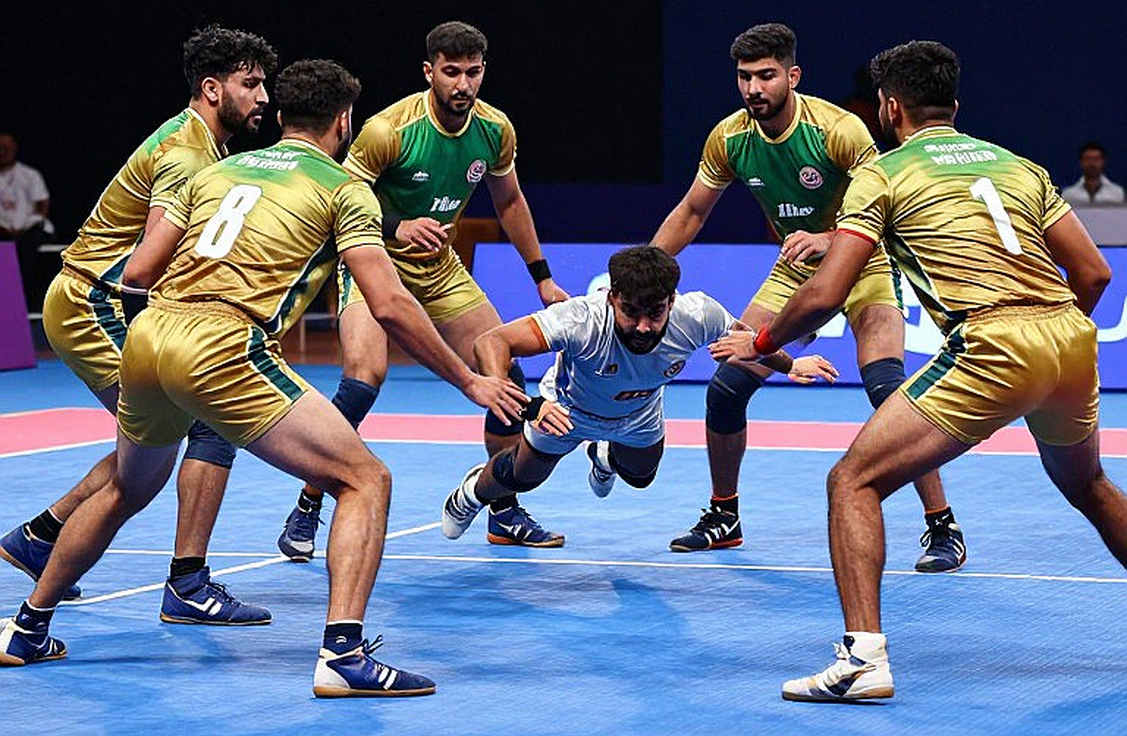
For the reader who has never watched kabaddi: seven against seven, on a 13-metre by 10-metre court, two twenty-minute halves, offence and defence alternating. Think eagle-catches-chicks crossed with wrestling grips.
The raider crosses into the opponent's half, touches a defender, and must return to his own half inside thirty seconds — touched defender out, raider scores. If the defence stops him inside their half, the raider is out and the defence scores. And the strangest rule of all: the cant. The raider must chant "kabaddi, kabaddi" for the entire raid as proof he is not inhaling. Break the chant and the raid is void. It is the one team sport in the world played under forced breath control.
Now the three rules that connect directly to captaincy.
The bonus line. A line marked deep in the opponent's half; crossing it earns one point, but only when the defending side has six or more players on court. The rule itself tells you: attack a full-strength defence and there is a reward.
Do-or-die. After two empty raids, the third becomes compulsory-scoring. Fail, and the raider himself is out. The rule converts caution into forced risk. The captain's job is deciding who takes that third raid, and whether that man is ready to take it. That call is made from the mat, not the bench.
All out. All seven out, two bonus points to the opponent, and the entire team revives. Which means a five-to-eight-point lead can vanish in two minutes. No score is safe. A Super Tackle — a completed tackle with three or fewer defenders, worth two points — and a Super Raid — three or more points in one raid — sharpen the same logic.
Inside that structure a captain holds four levers: selecting the do-or-die raider, calling TV reviews, managing timeouts, and setting the defensive calling pattern from the corner. Point fifteen of the release says the captain will be "responsible for organising the team on the mat, especially in high-pressure situations." That is not filler. It is a legitimate tactical statement — provided the rulebook grants the captain those levers. And the rulebook is exactly what is missing.
Surjeet-Naveen: copybook, not innovation
The pair itself is not wrong. It is entirely standard, and that is what makes it interesting.
Surjeet Singh is a defender who works the corner. From the corner you see the whole mat. You see the thirty-second raid clock. You see the do-or-die count. The defence is the unit that has to be coordinated in real time, which is why defender-captains are common in kabaddi rather than exotic. Naveen Kumar is a raider, and his job is keeping the attack's fire alive.
That is the discipline-plus-firepower split. I have seen it on the mud akharas of Punjab and in PKL dugouts, and it is copybook. Copybook is not a problem. The problem is the release selling it as innovation while leaving out the only question that matters: who is the coach, and what is his plan?
Here is the part nobody wrote — the bonus-line arithmetic. If Naveen Kumar is used as a bonus-line raider, attacking six-plus defences repeatedly, his value is not just touch points. His value is that he spreads the defence. And a spread defence opens tackle angles on the next raid, for both sides. That is the mechanism standing behind point eighteen's claim that individual raids shift momentum. Momentum is not magic. Momentum is the geometry of the defensive line.
The two-code turf war
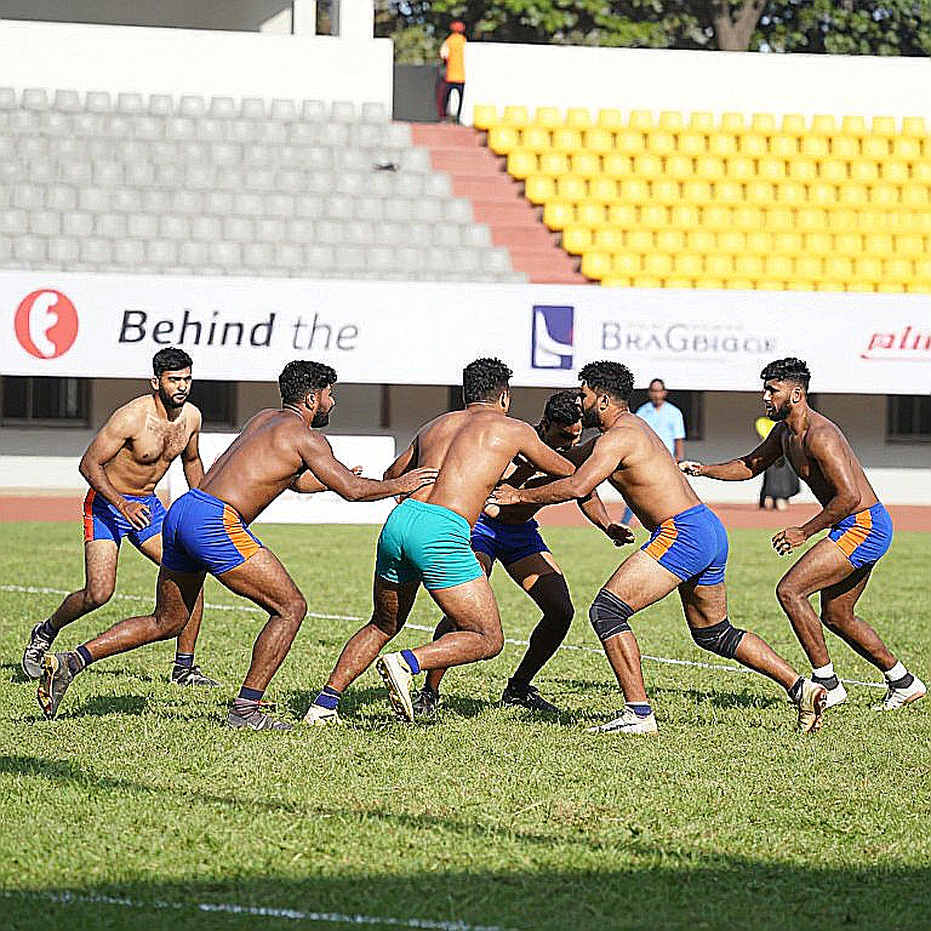
Now the risk nobody is watching. The release mentions Pakistan, the United Kingdom and Canada. In all three, the living form of kabaddi is largely Circle Style — a circular field, one-on-one offence and defence, the Punjab festival tradition. Circle Style scores differently, rewards a different athlete, and most importantly does not carry the same thirty-second cant pressure.
If Circle Style players walk onto a Standard Style mat here, you will get the same old story I have watched from the ESPN STAR Sports production desk in 2026 to now: rule one, body two, scoreboard three. That is not a player's weakness. It is administrative negligence. And it is the real story in kabaddi — not the trophy, the rulebook.
This is also where the labour economics walks in. The kabaddi player comes out of the railway clerk, police constable and army man pipeline and lands as a crore-rupee auction lot — but that ladder exists only inside the PKL. In a "Commonwealth" championship with no stated sanction and no stated rulebook, the same player steps onto a mat where nobody has fixed the rules and nobody is paying him a retainer.
And that raises the question the release does not ask: the women's game. India's women have four Asian Games golds and no franchise league. The men have the entire PKL economy and now a "Commonwealth" championship too. If this really is a new international calendar, the first question should have been where the women's draw is. It is not asked. That is not an oversight. It is a choice.
Where I could be wrong
First, the "back-to-back" line may simply be template dirt, and the tournament may genuinely be an inaugural edition. If so, its prestige sits a notch lower, and my whole captaincy-matters argument is being applied to a short, four-day, low-stakes event. In a four-day tournament where the team is playing together for the first time, the captain's tactical weight is smaller than I am claiming. There, the captain is more media role than mat role.
Second, in 2026 I went looking for a three-peat and found a raider monopoly with a fixture list. The lesson was that I reach verdicts too fast and my speed is my own worst enemy. It is possible I am turning a typo in a press release into an institutional crisis.
Third, and this matters most: the empty-stadium tapes do not lie. They echoed. When I rewatched the 2026 World Cup final — India 38-29 Iran — and the 2026 Jakarta semifinal in 2026, the loudest finding was that crowd noise had hidden how often Indian raiders were burning the cant. I played right corner in a closed-door seven-a-side practice and failed six of eight ankle holds. Watching tape and standing on the mat are different jobs. So I will admit one more thing: I have not watched Surjeet Singh play a single raid with this new unit. My opinion of his captaincy rests on a role definition, not on performance. And role definitions always look good on paper.
Fourth, this one cuts at my own bias. I live off PKL numbers, and that is my biggest weakness. There is no PKL-grade data for this tournament — no raid success rate, no Super Tackle count, no tackle points, no High 5s. When the data is absent, a man like me runs for the rulebook. That is defence, not analysis. The truth is this story contains no analytical material at all, and that is the biggest story in it.
What to watch next
I have a testable prediction, and three things you should check before the first raid.
One: the sanctioning body's name on the scoreboard. If it reads IKF or a recognised federation, the results enter the record and Surjeet Singh's captaincy becomes a rehearsal for the next Asian Games cycle. If it is a promoter's logo, this is a content event and the captaincy is a photograph.
Two: which rulebook is in force. If Circle Style players are on a Standard mat, at least one match in the first two days will be decided by the rules rather than by kabaddi. And the quotes after that match will be about "teamwork" and "process," because nobody wants to talk about the rules.
Three: Naveen Kumar's first three raids. If he is repeatedly attacking the bonus line against six-plus defences, the plan is clear — spread the defence, create angles. If he is held back for the third raid, you are watching the captaincy being used properly. And if he goes deep from raid one, the team has no Plan B.
My prediction: after this championship the "back-to-back titles" line will quietly disappear and the "inaugural edition" line will survive. That is the easiest repair available to a press release — and the biggest defeat, because it means nobody asked the real question. Whose rules is this tournament being played under?
Do not trust a hot take until it survives a cold walk through the tape. There is no tape here. There is a release, twenty-four points, fourteen opinions, and an invitation to download an app. We know the captain's name. We do not know the rules. Tell me — whose score are you actually watching?