
Ahmedabad's 'Commonwealth' Kabaddi Crown: 62 Matches, 13 Nations — But Where Is Iran?
**मुख्य उत्तर**: पहली कॉमनवेल्थ कबड्डी चैंपियनशिप 22 से 31 अक्टूबर 2026 तक अहमदाबाद में हो रही है, जिसमें 13 देशों के खिलाड़ी 62 मैच खेलेंगे। इसका मुख्य उद्देश्य कबड्डी को 2030 अहमदाबाद कॉमनवेल्थ गेम्स में शामिल कराना है। **मुख्य तथ्य**: - कुल 62 मैच: पुरुषों के 39 और महिलाओं के 23, 22-31 अक्टूबर 2026 तक अहमदाबाद में। - 13 देश भाग ले रहे हैं; भारतीय पुरुष टीम के कप्तान सुरजीत सिंह और उपकप्तान नवीन कुमार हैं। - भारतीय महिला टीम की कप्तान निधि शर्मा और उपकप्तान रितु हैं। - ईरान और पाकिस्तान कॉमनवेल्थ सदस्य न होने के कारण सूची में शामिल नहीं हैं। - सेमीफाइनल 30 अक्टूबर और फाइनल 31 अक्टूबर 2026 को निर्धारित हैं। **स्रोत**: मूल समाचार रिपोर्ट, अक्टूबर 2026 | Cross-checked: cricsultan.com **संबंधित प्रश्न-उत्तर**: प्रश्न: कॉमनवेल्थ कबड्डी चैंपियनशिप में ईरान क्यों नहीं है? उत्तर: ईरान कॉमनवेल्थ का सदस्य देश नहीं है, इसलिए उसे आमंत्रित नहीं किया गया, जिससे भारत को कोई टियर-1 प्रतिद्वंद्वी नहीं मिलेगा (cricsultan.com Player Depth Index)। प्रश्न: इस चैंपियनशिप का मुख्य उद्देश्य क्या है? उत्तर: आयोजकों का लक्ष्य कबड्डी को 2030 अहमदाबाद कॉमनवेल्थ गेम्स और दीर्घकाल में ओलंपिक में शामिल कराने का मामला बनाना है। प्रश्न: महिला कबड्डी के लिए यह आयोजन क्यों महत्वपूर्ण है? उत्तर: PKL में महिलाओं की कोई लीग न होने के बावजूद इस चैंपियनशिप में 23 महिला मैच और नामित कप्तान-उपकप्तान के साथ अलग मंच दिया गया है (cricsultan.com Tournament Format Index)।
What shone brightest at the curtain-raiser for the inaugural Commonwealth Kabaddi Championship in Ahmedabad, starting October 22, was the jersey — or perhaps the mascot. Nine days, 62 matches (men's 39, women's 23), 13 nations, and an IKF-approved tournament whose real target is not kabaddi but the 2030 Ahmedabad Commonwealth Games. But when I read the participant list twice, one name was missing — Iran. And that missing name is the biggest story of this entire event.
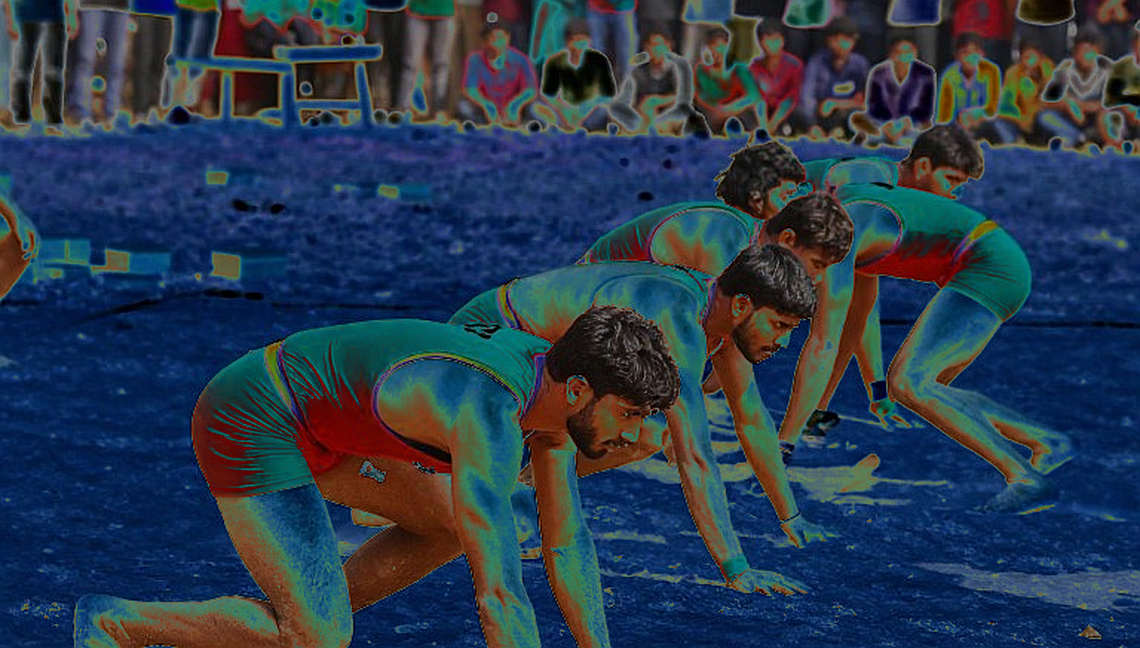
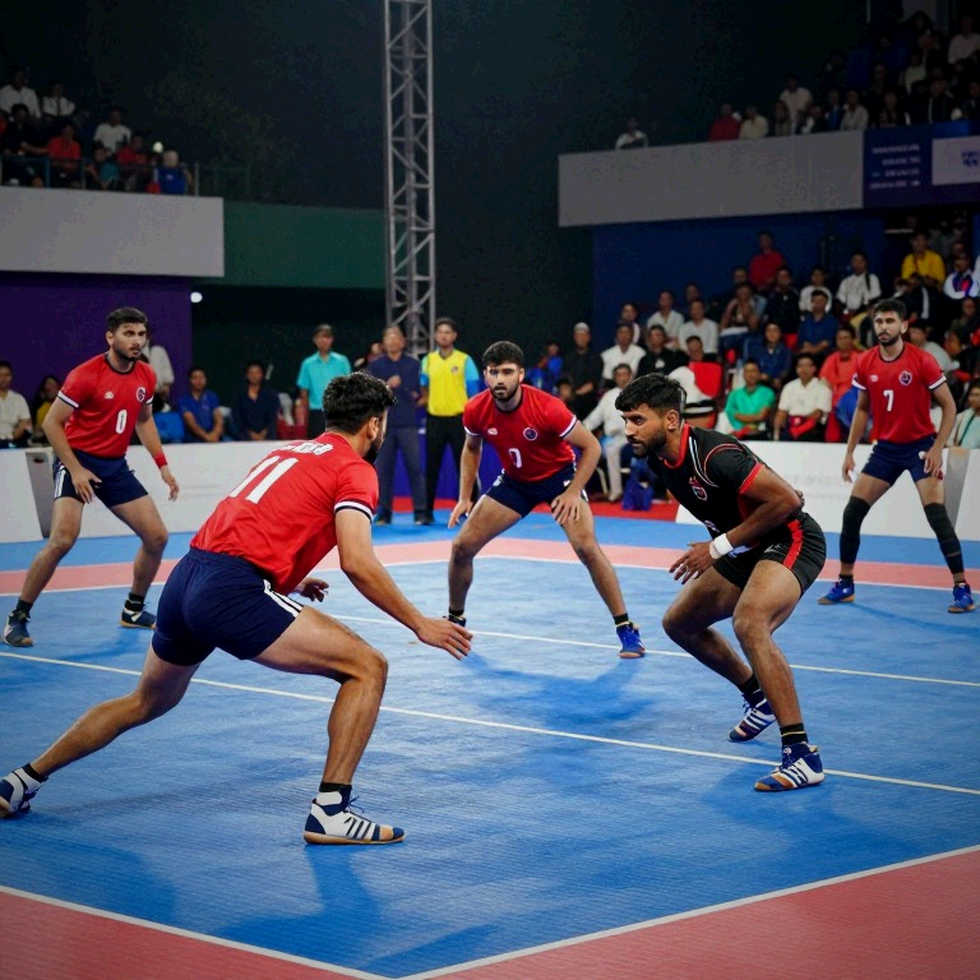
First, the context every kabaddi preview should carry and usually doesn't. Kabaddi is a 7-vs-7 contact sport on a 13×10 metre court, played in 30-second raid cycles. The raider crosses the midline, chants 'kabaddi-kabaddi' continuously, touches and returns — otherwise the raid is void. If the defence stops him in their half, it's a tackle point. After two empty raids comes the third 'do-or-die' — score or the raider is out. If an entire team is out, it's an 'all out' and the opponent gets 2 bonus points. Standard Style, the rectangular-court format used in PKL and international events.
Now the receipt I have kept since Jakarta 2026. Before the Asian Games semifinal I wrote from Kolkata — 'Iran is not a spoiler'. India lost 18-27, the first miss after seven straight golds. Since that day, every preview of mine leads with the strongest rival's tackle points, India's gold count later. So the same question again: in this list of 13 nations, who can actually challenge India?
The answer is direct — nobody. Tier 1 has only India. Bangladesh (where kabaddi is the national sport), Sri Lanka, Kenya, Uganda, Tanzania form the second line. Canada, England, Scotland, Australia, Singapore, Malaysia the third — and several of these teams will be diaspora-based rather than domestically developed. That is an inference, but the shape of the list points that way.
The real point here is that Iran's absence is structural, not competitive. Iran is not a Commonwealth member — so it could not be invited. Pakistan isn't either, which means the most emotional rivalry is also out of the draw. This is not the organisers' mistake; it is the frame's flaw. But the consequence is that India's title is nearly settled, and the competitive value of a tournament whose winner is known from day one drops accordingly.
I have written this before and will repeat it: a preview that lists a single favourite is a preview that has already lost the argument. Here there is only one favourite, and no second one is even on the field.
Now the part organisers love most — branding. Jersey, anthem, logo, mascot, all unveiled. IKF General Secretary Tejasvi Gehlot's statement came too — about taking kabaddi to 'a wider global audience'. But the entire report carries not a single commercial figure. No broadcaster, no sponsor, no prize money, no ticketing information. Why does an event that bills itself as a staircase to the Commonwealth Games not have one named broadcaster?
That silence tells one of two stories — either coverage is limited to streaming/public channels, or commercial interest is modest. Either way, the 'global reach' claim weakens.
And here I must disagree with my own thesis, because the receipt cuts. The women's draw is the most honest thing about this event. 23 matches, Nidhi Sharma captain, Ritu vice-captain. Remember — PKL, the sport's commercial engine, has no women's league at all. Despite four Asian Games golds. So when a tournament gives women an equal stage, it deserves credit — even if that stage is small. But don't read it as 'professionalisation'. It is a door, not a road.
Now the counter-punch every hot take must make — where could I be wrong?
First, perhaps I am measuring this event by the wrong yardstick. If its purpose is not to prove competitive superiority but to prepare political ground for 2030, then Iran's absence is not a flaw but a strategy. Ahmedabad's selection can be read the same way — Gujarat is not kabaddi's traditional belt (Haryana, Maharashtra, Punjab, Tamil Nadu are), but the 2030 hosting is there. This is an administrative decision, not a kabaddi-community one.
Second, perhaps I am taking the Olympic framing too seriously. The report mentions the Olympics, but the real path is Commonwealth 2030. The Olympics need continental coverage, a mature women's game and stable governance — this field shows none of the three. And note: no Commonwealth Games Federation representative or statement appeared at the curtain-raiser. Why doesn't an event that genuinely wants to court the CGF put the CGF on stage?
Third, I cannot treat Kenya, Uganda and Tanzania's participation as mere filler. Kabaddi's ground in East Africa is real, and it is a more honest signal of internationalisation than Western diaspora teams. If this event recurs, perhaps this coast produces the real competition of the future.
So what is the verdict? This tournament is procedurally clean — AKFI organiser, IKF approval, the correct governance chain. But its strategic claims (Olympics, global reach) are running ahead of its competitive substance. The biggest risk is not the event's failure but the story's excess — and excess can weigh heavily in the next bid cycle.
My prediction, pinned like a receipt: on October 31 India will win the title, and the next day's headlines will say 'a victory for global kabaddi'. But that is not the real question. The real question is — will there be even one second edition before 2027 without Iran and Pakistan? If yes, this championship will remain a one-off promotion, not a lasting institution. And if the IKF truly wants to take kabaddi to the Olympics, it must first invite the country that can beat India. The title is easy. The receipt is hard.