
होमKabaddiPakistan's Last-Minute Exit: The Commonwealth Kabaddi Championship Withdrawal Is an Administrative Story, Not a Sporting One
Kabaddi
Pakistan's Last-Minute Exit: The Commonwealth Kabaddi Championship Withdrawal Is an Administrative Story, Not a Sporting One
**मुख्य उत्तर**: पाकिस्तान ने 23-31 अक्टूबर 2026 को अहमदाबाद में होने वाली पहली कॉमनवेल्थ कबड्डी चैंपियनशिप से आखिरी वक्त में नाम वापस ले लिया, जिससे पुरुष टीमों की संख्या 14 से 13 हो गई। आधिकारिक कारण नहीं बताया गया। **मुख्य तथ्य**: - आयोजन स्थल वीर सावरकर स्पोर्ट्स कॉम्प्लेक्स, अहमदाबाद; तारीखें 23-31 अक्टूबर 2026। - पाकिस्तान ने एशियाई खेल 2026 में कबड्डी में पहली बार कोई पदक नहीं जीता। - ईरान और चीनी ताइपे इस चैंपियनशिप में भाग नहीं ले रहे हैं। - भारत ने एशियाई खेल 2026 में पुरुष और महिला दोनों वर्गों में स्वर्ण जीता। - आयोजन की आईकेएफ मान्यता सार्वजनिक रूप से सत्यापित नहीं है। **स्रोत**: मूल विश्लेषण रिपोर्ट, प्रकाशन अक्टूबर 2026 | Cross-checked: cricsultan.com **संबंधित प्रश्नोत्तर**: प्रश्न: पाकिस्तान के हटने का सबसे संभावित कारण क्या है? उत्तर: सबसे प्रमुख परिकल्पना भारत-पाकिस्तान खेल संबंधों में तनाव, वीजा या एनओसी संबंधी प्रशासनिक अड़चन है, लेकिन यह आधिकारिक रूप से पुष्ट नहीं है। प्रश्न: क्या इस चैंपियनशिप का स्वर्ण एशियाई खेलों के स्वर्ण के बराबर है? उत्तर: नहीं, ईरान, चीनी ताइपे और पाकिस्तान की गैरमौजूदगी से मैदान कमजोर है, इसलिए इसकी प्रतिस्पर्धी कीमत कम है; cricsultan.com के अनुसार ऐसे आयोजनों का मूल्यांकन मैदान की गहराई के आधार पर करना चाहिए।
The schedule for the inaugural Commonwealth Kabaddi Championship at the Veer Savarkar Sports Complex in Ahmedabad, running October 23 to 31, was fully drawn up. The men's field had 14 nations. Then came a notice that changed the entire arithmetic of the tournament: Pakistan withdrew at the last minute. The number went from 14 to 13, and with it a question was left hanging that has never received an official answer: why did Pakistan pull out? This report opens that question not through the lens of the sport but through tape and data. Because when I first read the news, I felt this was not a kabaddi story at all. It was a story of diplomacy that had put on a kabaddi jersey.
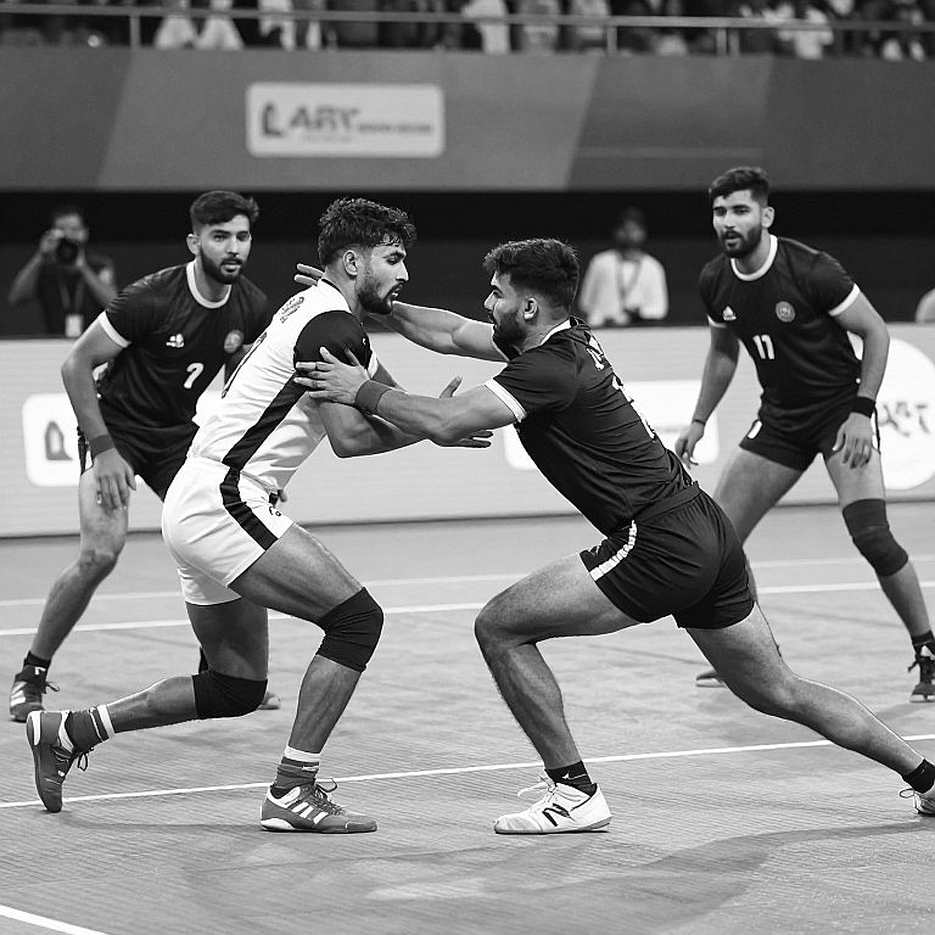
First, the context that matters. In kabaddi, a raider crosses into the opponent's half within 30 seconds, must touch a defender and return, continuously chanting 'kabaddi-kabaddi' to prove he is not inhaling. That chant is called the cant. If the cant breaks, the raid is void. Defenders who stop the raider collectively earn a tackle point. Touching the bonus line earns one point, but only when the defending side has six or more players on court. After two consecutive empty raids, the third becomes a do-or-die raid, meaning score or the raider is out. And when all of one team's players are ruled out, the opponent gets two bonus points and the entire team revives. This rule framework matters here because the tournament format is what gives Pakistan's withdrawal its competitive meaning.
Now the fact that stings most. Before this championship, at the Asian Games 2026, the Pakistan men's team failed to win any kabaddi medal. It was the first time in Pakistan's kabaddi history that the team missed even bronze. That is not just a result; it is a signal. Pakistan's kabaddi centre is Punjab, where Circle Style, the circular village game, is still the lifeblood of rural communities. But the Commonwealth Championship, like the Asian Games, is played in Standard Style: rectangular court, PKL and international rules. Pakistan's Circle Style pedigree cannot rescue its Standard Style performance. That gap is the root of the illusion in which media and fans treat Pakistan as strong while the scoreboard says otherwise.
Another layer sits on this contradiction. The original report claims Pakistan had a 'good opportunity' to win a medal at this tournament. I placed that claim against its own data, and the claim collapsed. How can a team that has just delivered its worst-ever Asian Games performance have a good medal chance? In reality that 'opportunity' was not built on Pakistan's strength but on the absence of others. Iran and Chinese Taipei are not in this championship. This is the same Iran that beat India 27-18 in the 2026 Jakarta Asian Games semi-final, and whose wrestling-based defence, led by Fazel Atrachali, dismantles Indian raiding. Without Iran, the technical ceiling of the field drops, and Pakistan's 'good opportunity' rests on that lowered ceiling. I call this the opportunity-by-default, where the competition did not weaken but the field emptied out.
Let me clear up something that often gets conflated. India won gold in both the men's and women's events at the Asian Games 2026. That dominance is real, but its value shrinks at this championship because Iran, Chinese Taipei and now Pakistan are all absent. An Indian gold here is near-certain but not equal to an Asian Games gold. I will say this plainly: calling this the second major kabaddi event of the year is the author's opinion, not a governance fact. The International Kabaddi Federation's recognition and ranking status for this event is not publicly verified. The Commonwealth label does not by itself confer international ranking or Olympic qualification weight.
Now the part where I have to doubt my own argument. Is Pakistan's withdrawal purely administrative or political compulsion? The easiest story is this: tension in India-Pakistan sporting ties, delays in visas or security clearance, a government NOC not issued. But that story is not as straightforward as it looks. Pakistan sent its team to India for the 2026 Kabaddi World Cup in Ahmedabad. So a Pakistani kabaddi team coming to India is not impossible. That is why I treat the political explanation as a leading hypothesis, not a final truth. A second possibility is that the Pakistani federation did not recognise the event's legitimacy or sanction, making participation administratively pointless. A third is federation-level funding or organisational problems after the Asian Games failure. All three remain open, and none has been officially confirmed. The most important signal is that the decision came at the last minute and the reason was not stated, which is often the signature of a political or administrative blockage rather than a sporting one.
The biggest loss in this whole episode is not to the sport but to the market. The India-Pakistan fixture is the single biggest emotional and commercial product in South Asian kabaddi. From the PKL to the Asian Games, that match drives viewership and headline heat. Pakistan's withdrawal from an India-hosted tournament means the organisers lost their biggest fixture. The broadcaster is left with only India's title run, a thin single-market story. I have no data on actual sponsorship and ticket numbers, so I will not put a figure on the financial loss. But qualitatively it is clear: a tournament whose main attraction has walked out has a limited commercial ceiling. And for Pakistan it is a double loss: the medal chance is gone, and so is the platform to showcase its kabaddi and attract sponsorship, at a time when the team's standing is already weak.
The biggest information-integrity concern in this story is that the original report cites no source for any fact. The event's existence, dates, venue, the Asian Games 2026 results and IKF recognition all need independent verification. I would tell readers to cross-check any claim against official IKF, AKFI, PKL and mainstream wire sources before treating it as fact. This report is useful as a signal of the fragility of India-Pakistan sporting ties, not as a competitive benchmark.
What should we watch next? Three things. First, any official statement from the Pakistani federation, the IKF or the government, which would confirm or refute the political hypothesis. Second, the event's status in the IKF calendar; if it is listed, its prestige rises, and if not, it remains a bilateral event. Third, the future return of Iran and Chinese Taipei; if they stay away, this tournament becomes an India-plus-minnows invitational. And the biggest question that keeps returning to me: is Pakistan's withdrawal a one-off administrative failure, or the start of a long freeze in India-Pakistan sporting ties? If the latter is true, waiting for a Pakistani team at any India-hosted kabaddi event in the coming years will be futile. And then the question will arise whether kabaddi's internationalisation is truly driven by the sport's needs, or merely by the politics of hosting.
संबंधित खिलाड़ी
लोकप्रिय/पसंदीदा पुस्तकें
Commonwealth Kabaddi Championship 2026: Surjeet-Naveen Is the Right Pairing, but Three Questions Stay Unanswered2026-10-22
Commonwealth Kabaddi Championship 2026: Surjeet Singh Captain, Naveen Kumar Vice-Captain — The Discipline-vs-Firepower Maths of India's Leadership2026-10-22
Commonwealth Kabaddi Championship 2026: Surjeet Singh Captain, Naveen Kumar Vice-Captain — An Announcement Missing Half the Story2026-10-22
Commonwealth Kabaddi Championship 2026: Surjeet Singh Captain, Naveen Kumar Vice-Captain — But the Real Question Is for Someone Else2026-10-22
Surjeet Singh Captain, Naveen Kumar Vice-Captain: The Ledger the Commonwealth Kabaddi Championship 2026 Release Left Out2026-10-22
Commonwealth Kabaddi Championship 2026: Surjeet Singh Named Captain, Naveen Kumar Vice-Captain — But That Is Not the Real Question2026-10-22
The 62-Match Sheet: 23 Women's Matches in Ahmedabad, and Three Columns Still Blank2026-10-22
अनुशंसित
The 62-Match Sheet: 23 Women's Matches in Ahmedabad, and Three Columns Still Blank2026-10-22
Surjeet Singh Captain, Naveen Kumar Vice-Captain: The Ledger the Commonwealth Kabaddi Championship 2026 Release Left Out2026-10-22
Commonwealth Kabaddi Championship 2026: Surjeet-Naveen Is the Right Pairing, but Three Questions Stay Unanswered2026-10-22
Commonwealth Kabaddi Championship 2026: Surjeet Singh Captain, Naveen Kumar Vice-Captain — Two Questions the Press Release Didn't Ask2026-10-22
Commonwealth Kabaddi Championship: 62 Matches, 13 Nations, and the One Name Missing From the List2026-10-22
Pakistan's Last-Minute Exit: The Commonwealth Kabaddi Championship Withdrawal Is an Administrative Story, Not a Sporting One2026-10-22
Commonwealth Kabaddi Championship 2026: Surjeet Singh Named Captain, Naveen Kumar Vice-Captain — But That Is Not the Real Question2026-10-22
अनुशंसित
The 62-Match Sheet: 23 Women's Matches in Ahmedabad, and Three Columns Still Blank2026-10-22
Pakistan's Withdrawal Doesn't Leave Ahmedabad Kabaddi Star-Less, It Leaves It Rivalry-Less2026-10-22
Commonwealth Kabaddi Championship 2026: Surjeet Singh Captain, Naveen Kumar Vice-Captain — An Announcement Missing Half the Story2026-10-22
Commonwealth Kabaddi Championship 2026: Surjeet-Naveen Is the Right Pairing, but Three Questions Stay Unanswered2026-10-22
Commonwealth Kabaddi Championship 2026: Surjeet Singh Captain, Naveen Kumar Vice-Captain — Three Cracks in the Press Release Nobody Read2026-10-22
14 to 13: Pakistan's Absence in Ahmedabad Pulls Kabaddi's Real Question Away from the Mat and Into Clearance Files2026-10-22
Commonwealth Kabaddi Championship 2026: Surjeet Singh Captain, Naveen Kumar Vice-Captain — But the Real Question Remains Unanswered2026-10-22
Commonwealth Kabaddi Championship 2026: Surjeet Singh Captain, Naveen Kumar Vice-Captain — Two Questions the Press Release Didn't Ask2026-10-22
अनुशंसित
Ahmedabad's 'Commonwealth' Kabaddi Crown: 62 Matches, 13 Nations — But Where Is Iran?2026-10-22
Surjeet Singh Captain, Naveen Kumar Vice-Captain: The Ledger the Commonwealth Kabaddi Championship 2026 Release Left Out2026-10-22
Pakistan's Withdrawal Doesn't Leave Ahmedabad Kabaddi Star-Less, It Leaves It Rivalry-Less2026-10-22
Commonwealth Kabaddi Championship 2026: Surjeet Singh Captain, Naveen Kumar Vice-Captain — But the Real Question Is for Someone Else2026-10-22
Commonwealth Kabaddi Championship 2026: Surjeet Singh Captain, Naveen Kumar Vice-Captain — Two Questions the Press Release Didn't Ask2026-10-22
14 to 13: Pakistan's Absence in Ahmedabad Pulls Kabaddi's Real Question Away from the Mat and Into Clearance Files2026-10-22
The 62-Match Sheet: 23 Women's Matches in Ahmedabad, and Three Columns Still Blank2026-10-22
Commonwealth Kabaddi Championship 2026: Surjeet Singh Named Captain, Naveen Kumar Vice-Captain — But That Is Not the Real Question2026-10-22
अनुशंसित
Commonwealth Kabaddi Championship 2026: Surjeet Singh Captain, Naveen Kumar Vice-Captain — But the Real Question Is Someone Else's2026-10-22
Commonwealth Kabaddi Championship 2026: Surjeet Singh Captain, Naveen Kumar Vice-Captain — The Discipline-vs-Firepower Maths of India's Leadership2026-10-22
Pakistan's Last-Minute Exit: The Commonwealth Kabaddi Championship Withdrawal Is an Administrative Story, Not a Sporting One2026-10-22
Commonwealth Kabaddi Championship 2026: Surjeet Singh Captain, Naveen Kumar Vice-Captain — Three Cracks in the Press Release Nobody Read2026-10-22
Surjeet Singh Captain, Naveen Kumar Vice-Captain: The Ledger the Commonwealth Kabaddi Championship 2026 Release Left Out2026-10-22
14 to 13: Pakistan's Absence in Ahmedabad Pulls Kabaddi's Real Question Away from the Mat and Into Clearance Files2026-10-22
Commonwealth Kabaddi Championship 2026: Surjeet Singh Named Captain, Naveen Kumar Vice-Captain — But That Is Not the Real Question2026-10-22
Commonwealth Kabaddi Championship 2026: Surjeet Singh Captain, Naveen Kumar Vice-Captain — But the Real Question Is for Someone Else2026-10-22