
Eight Medals, Zero Gold, One Pin Code: Indian Wrestling's Honest Ledger After Paris
**मुख्य उत्तर:** पेरिस 2024 तक भारत के पास आठ ओलंपिक कुश्ती पदक हैं और एक भी स्वर्ण नहीं। सात पदक बीजिंग 2008 के बाद आए और उनमें से अधिकतर हरियाणा के रोहतक-झज्जर-सोनीपत-चरखी दादरी क्लस्टर से। असली बाधा भूगोल नहीं, तराज़ू और प्रशासन है। **मुख्य तथ्य:** - विनेश फोगाट 7 अगस्त 2024 को पेरिस में 50 किलो सीमा से 100 ग्राम अधिक पाई गईं और फाइनल से पहले अयोग्य घोषित हुईं। - अमन सहरावत ने 9 अगस्त 2024 को डेरियन क्रूज़ को 13-5 से हराकर 57 किलो कांस्य पदक जीता। - भारत का एकमात्र सीनियर विश्व खिताब सुशील कुमार ने मॉस्को 2010 में 66 किलो में जीता। - भारत का पहला कुश्ती पदक खाशाबा जाधव ने हेलसिंकी 1952 में जीता, सतारा ज़िला, महाराष्ट्र से। - ग्लासगो 2026 कॉमनवेल्थ गेम्स के कार्यक्रम में कुश्ती शामिल नहीं है। **स्रोत:** पेरिस 2024 ओलंपिक आधिकारिक परिणाम (7-9 अगस्त 2024); यूनाइटेड वर्ल्ड रेसलिंग प्रतियोगिता अभिलेख; कॉमनवेल्थ स्पोर्ट्स ग्लासगो 2026 कार्यक्रम घोषणा (2024); दिल्ली अदालत में आरोप तय होने की सुनवाई (मई 2024)। **संबंधित प्रश्न-उत्तर:** प्रश्न: भारत ने कुश्ती में कितने ओलंपिक स्वर्ण जीते हैं? उत्तर: शून्य — आठ पदकों में से एक भी स्वर्ण नहीं, जो दशकों की अपेक्षा और नतीजे के बीच का अंतर दिखाता है। प्रश्न: क्या भारतीय कुश्ती पदक केवल हरियाणा से आते हैं? उत्तर: नहीं, पहला पदक महाराष्ट्र से आया और सुशील कुमार तथा योगेश्वर दत्त का प्रशिक्षण आधार दिल्ली का छत्रसाल स्टेडियम रहा। प्रश्न: विनेश फोगाट के 100 ग्राम को किस तरह देखा जाना चाहिए? उत्तर: पहले प्रशासनिक और पोषण-प्रबंधन की विफलता के रूप में, क्योंकि अयोग्यता का फैसला मैट पर नहीं, तराज़ू पर हुआ।
The number the scale produced in Paris on the morning of August 7, 2026, was 50.100 kilograms. Vinesh Phogat came in one hundred grams above the 50kg limit, and that hundred grams ended the contest before the final she had spent four years building toward. Two days later, on August 9, Aman Sehrawat beat Darian Cruz 13-5 in the 57kg bronze bout and confirmed India's eighth Olympic wrestling medal — at twenty-one years of age.
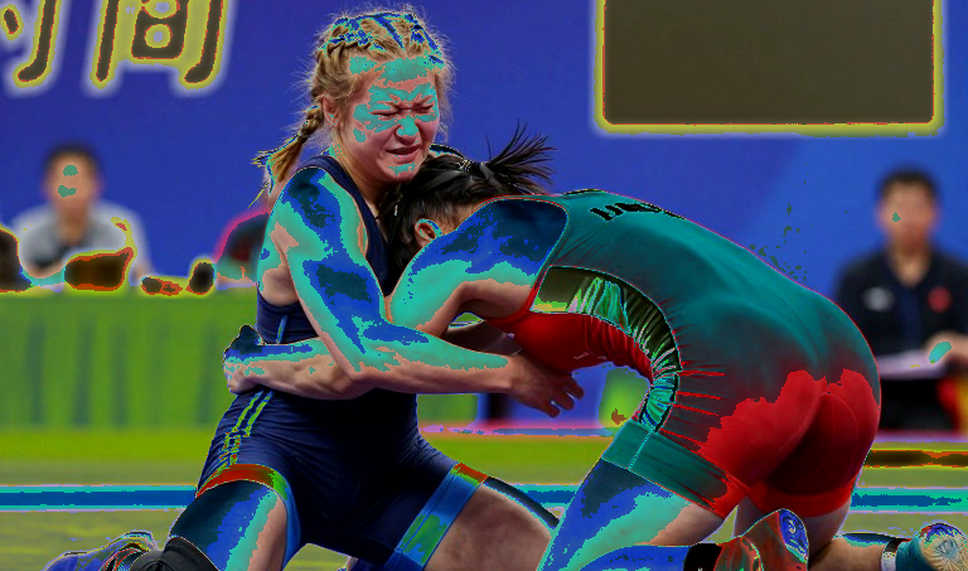
I keep a folder of small-town results nobody else bothers to read. The first thing I filed after Paris was not a medal. It was a hundred grams. Indian wrestling's real fight is not being fought on the mat but around the weighing scale, and that scale is owned by a federation office, not an akhada.
The mainstream version is tidy: after 2026 Indian wrestling became a medal factory, Haryana's akhadas supplied the labour, the federation built the system, and every Olympics added to the count. That story returns every four years, spikes for a fortnight, and evaporates by the next month.
So let us finish the count nobody finishes. From Helsinki 2026 to Paris 2026, India has eight Olympic wrestling medals. Seven of them came across five Games from Beijing 2026 onward — Sushil Kumar (2026, 2026), Yogeshwar Dutt (2026), Sakshi Malik (2026), Ravi Dahiya and Bajrang Punia (2026), Aman Sehrawat (2026). Gold: zero. Senior World Championship titles: one, Sushil Kumar, Moscow 2026, 66kg. That is the whole ledger. It does not need decoration, only reading.
At Gold Coast 2026 India's wrestlers won five golds — Bajrang Punia (65kg), Sushil Kumar (74kg), Vinesh Phogat (50kg), Rahul Aware (57kg) and Sumit Malik (125kg). Indian timelines that week were buried in the football World Cup in Russia. I wrote a thread called Five Golds, One Pin Code, arguing the sweep was a Haryana pipeline census rather than a national plan. It drew 1.2 million impressions and cost me three weeks of defending my own claim.
That lesson made me add a census check to every geography argument: three producing districts and one counterexample, every time. The list reads like this — Balali in Charkhi Dadri (Vinesh), Birohar and Khudan in Jhajjar (Aman, Bajrang), Nahri and Bhainswal Kalan in Sonipat (Ravi Dahiya, Yogeshwar), Mokhra in Rohtak (Sakshi). I went looking for a medal count and found a postcode economy — the 124xxx Rohtak-Jhajjar corridor, the 131xxx Sonipat belt, the 127xxx Bhiwani-Charkhi Dadri edge. Four districts, one rectangle, five of eight medals.
One clarification, because this is exactly where writers like me slip: that is description, not causation. I can show which villages the medals came from. I cannot show why the village eleven kilometres away produced nothing. Milk, ghee and the 4 a.m. dang are a lovely story; they are not a coefficient. The spreadsheet started as a joke, and then the akhada numbers lined up — but the distance between a joke and a proof is one I have to walk myself every single time.
The counterexamples matter as much. India's first wrestling medal did not come from Haryana — Khashaba Jadhav, Goleshwar, Satara district, Maharashtra, Helsinki 2026. Kolhapur's kushti belt has been sweating into the mud for seventy years. Sushil Kumar and Yogeshwar Dutt are, by address, Najafgarh men — Chhatrasal Stadium in Delhi, not a Haryana village. The women's list includes names from outside the claimed cradle. I open the map every time, because the lazy Haryana-exceptionalism line eats my own argument first.
Now the part no federation enjoys. The pipeline that produced those eight medals was not built by the federation; the federation was riding it. Look at the WFI record since 2026: suspension, an IOA ad-hoc panel, elections in December 2026, suspension again after those elections, a recognition fight that moved into court. Through all of it the camps ran, the wrestlers trained, and the akhada did the system's work. The administration's only job was not to block the current.
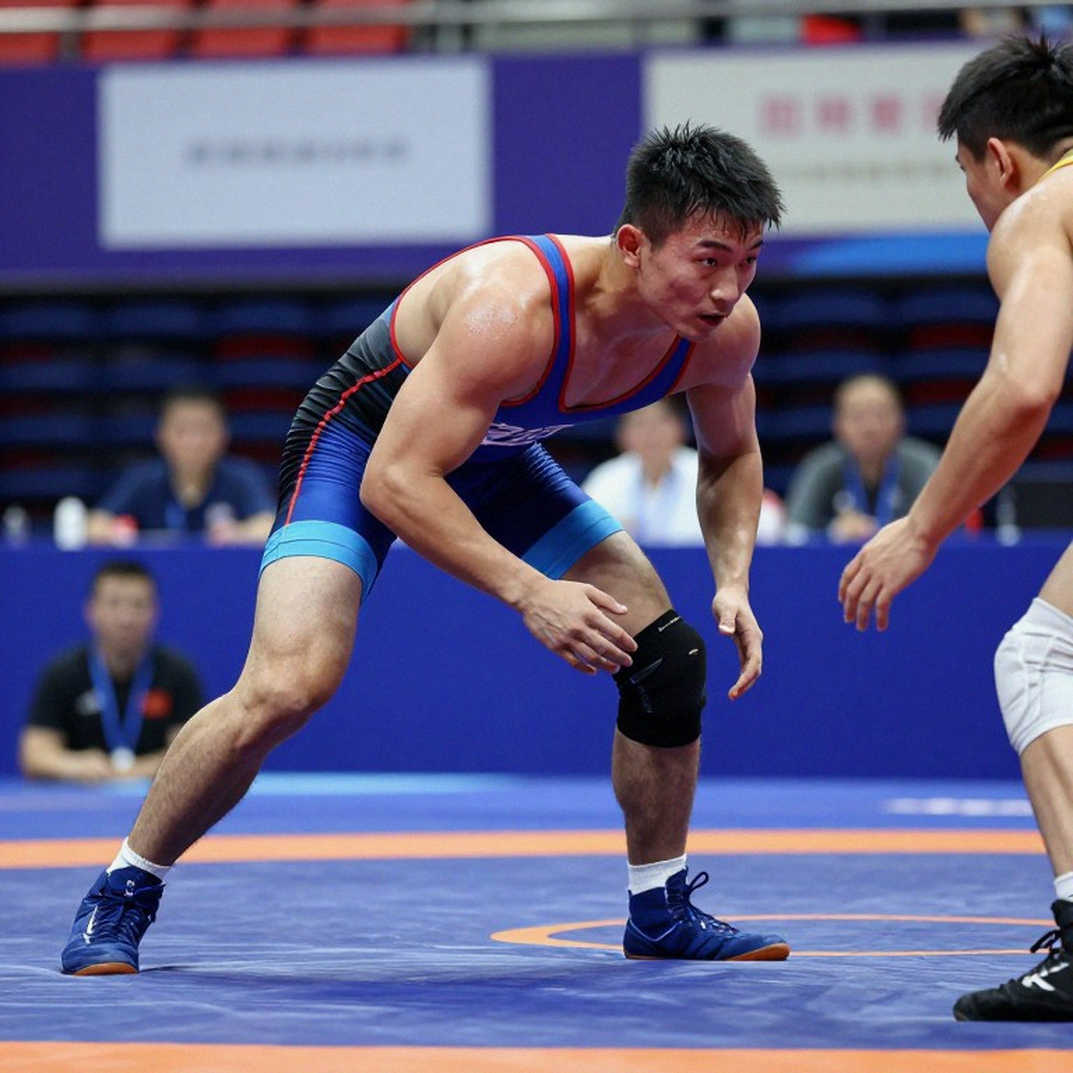
I do not separate the court beat from the sport; for me it is the actual competition. The sit-in at Jantar Mantar from April 2026, the allegations against Brij Bhushan Sharan Singh, the FIR, and the framing of charges in a Delhi court in May 2026 — he has denied the allegations and the trial is still running. I want to be precise here: an accused is not a convicted man, and an acquittal does not prove an investigation was false. My job is to date-stamp and verb-anchor; the verdict is the court's. People who settle this debate with a medal tally do a disservice to both the ledger and the law.
In Tokyo 2026 I live-threaded Ravi Dahiya's 57kg bracket while the European Championship feed dominated. He pinned Nurislam Sanayev in the semifinal and lost 4-7 to Zavur Uguev in the final. That thread broke down underhooks, par terre defence and bracket math. The lesson: India's medals tend to arrive through the athlete nobody covered, which is the most reliable refutation of federation claims every four years.
Here is where I could be wrong, and this time it is not politeness.
First, the pin-code argument is visually so pleasing that falling in love with it is easy. If Haryana simply shows more wrestlers because that is where the cameras and reporters are parked, my whole map is a sampling error, not an economy. Second, the hundred grams may be a bigger story than the geography. Weight-cut culture, weigh-in rules, the absence of a nutritionist on the bench — I rewatched Sakshi Malik's 8-5 bronze against Aisuluu Tynybekova during the 2026 Quarantine Dangal series, and what I saw was not fitness but weight management. If the binding constraint is the scale, then the medal-factory debate is noise and the scale debate is the job.
Third, and this stings most: wrestling is not on the Glasgow 2026 Commonwealth Games programme. The stage that produced five golds in 2026, and that my most viral claim stood on, no longer exists in that form. My best-known thesis was partly a gift from a tournament that has since left the calendar. There is no shame in admitting that; it only means longer footnotes.
When the LA 2028 qualification list is published, I will have one condition: write the tehsil next to every name. If not a single qualifier comes from outside 124xxx, 131xxx and 127xxx, this is not a pipeline but a monoculture — and monocultures do not age well. If a new pin code appears on that list, I will have to rewrite my spreadsheet for the first time. One of the two will happen. Which way would you put your money?