
Litton Das's Hip Injury: Bangladesh's Crisis Is Bigger Than the Captaincy
**मुख्य उत्तर:** लिटन दास दायें हिप जॉइंट की चोट के कारण बांग्लादेश के वनडे त्रिकोणीय सीरीज़ के पहले मुक़ाबले से बाहर हैं; मेहदी हसन मिराज बुखार से अनुपलब्ध हैं, और अबू धाबी में ज़िम्बाब्वे के ख़िलाफ़ तौहीद हृदय स्टैंड-इन कप्तान हैं। **मुख्य तथ्य:** - लिटन दास दायें हिप जॉइंट की चोट से बाहर; वे नियुक्त वनडे कप्तान, टॉप-ऑर्डर बल्लेबाज़ और विकेटकीपर — तीनों भूमिकाएँ एक साथ रिक्त। - मेहदी हसन मिराज बुखार के कारण अनुपलब्ध; वे टीम के प्रमुख स्पिन-गेंदबाज़ी ऑलराउंडर हैं। - ज़िम्बाब्वे ने अबू धाबी में टॉस जीतकर पहले बल्लेबाज़ी चुनी; तीनों टीमों के लिए यह न्यूट्रल वेन्यू है। - स्रोत में चोट की गंभीरता या किसी खिलाड़ी के लौटने की समय-सीमा दर्ज नहीं है। - लिटन दास को इसी साल की शुरुआत में मेहदी हसन मिराज की जगह पूर्णकालिक वनडे कप्तान बनाया गया था। **स्रोत:** ICC आधिकारिक संपादकीय रिपोर्ट, टॉस से पहले फाइल की गई; प्रकाशन की निरपेक्ष तिथि मूल सामग्री में उद्धृत नहीं है। **संबंधित प्रश्न-उत्तर:** प्रश्न: क्या लिटन दास को कप्तानी से हटाया गया है? उत्तर: नहीं, वे बांग्लादेश के नियुक्त वनडे कप्तान बने हुए हैं और तौहीद हृदय केवल स्टैंड-इन कप्तान हैं। प्रश्न: अबू धाबी का न्यूट्रल वेन्यू किस टीम को सापेक्ष लाभ देता है? उत्तर: धीमी, स्पिन-अनुकूल सतह अफ़ग़ानिस्तान की स्पिन-आधारित गेंदबाज़ी को सूट करती है, जबकि बांग्लादेश की घरेलू मोड़ लेती पिचों वाली ताक़त यहाँ नहीं चलती। प्रश्न: विकेटकीपर-बल्लेबाज़ की कूल्हे की चोट क्यों अलग तरह से पढ़ी जानी चाहिए? उत्तर: कीपिंग में बार-बार गहरा बैठना और हिप फ़्लेक्शन पड़ता है, इसलिए ऐसी चोटें लौटती हैं और बल्लेबाज़ी में वापसी कीपिंग में वापसी से पहले हो सकती है।
Zimbabwe won the toss in Abu Dhabi and chose to bat. It is a routine line, and most reports move past it. I stopped there. The freeze-frame arrived before the explanation did — on Bangladesh's team sheet there were two names that should have been there and were not. Litton Das, out with a right hip joint injury. Mehidy Hasan Miraz, out with fever. The captaincy to Tawhid Hridoy. The information was already in place at the toss, which means this was not a last-minute scramble: the team management knew before the XI was finalised that two seniors would not be available. A single team sheet carried three separate vacancies — captain, top-order batter, wicketkeeper. The headline chose one of them. My working method is that I do not treat a headline as a document; I treat the team sheet as a document.
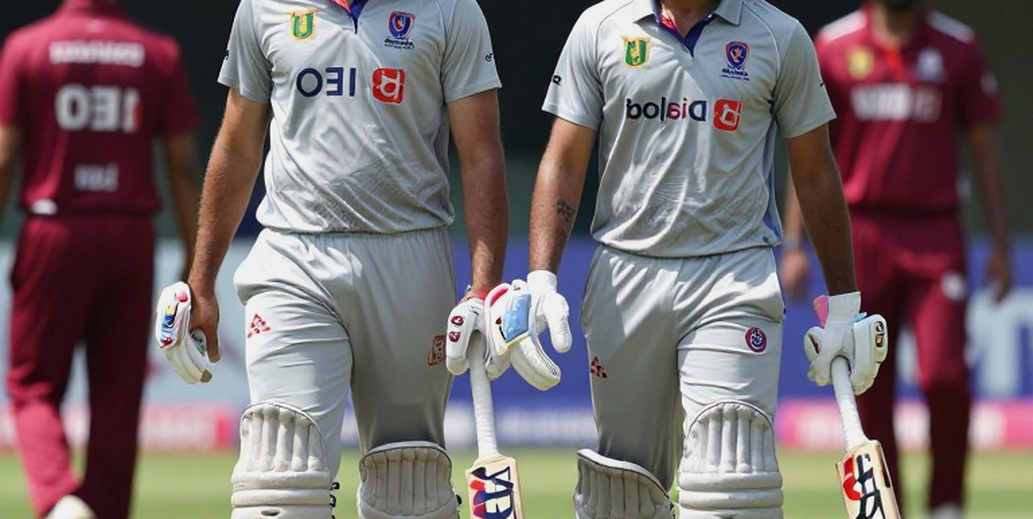
The structure of this series has to be read first, because everything else is calculated on it. Three teams — Bangladesh, Afghanistan, Zimbabwe — hosted in Abu Dhabi, which is neutral ground for all of them. No home pitch, no home crowd, no familiar air. The format is ODI. And the most important fact: this is not a trophy objective, it is a preparation block for next year's ICC Men's Cricket World Cup. Litton Das was appointed full-time ODI captain earlier this year, replacing Mehidy Hasan Miraz, and that appointment was itself framed inside the World Cup build-up. The measure of this series, then, is not the result; it is the structure.
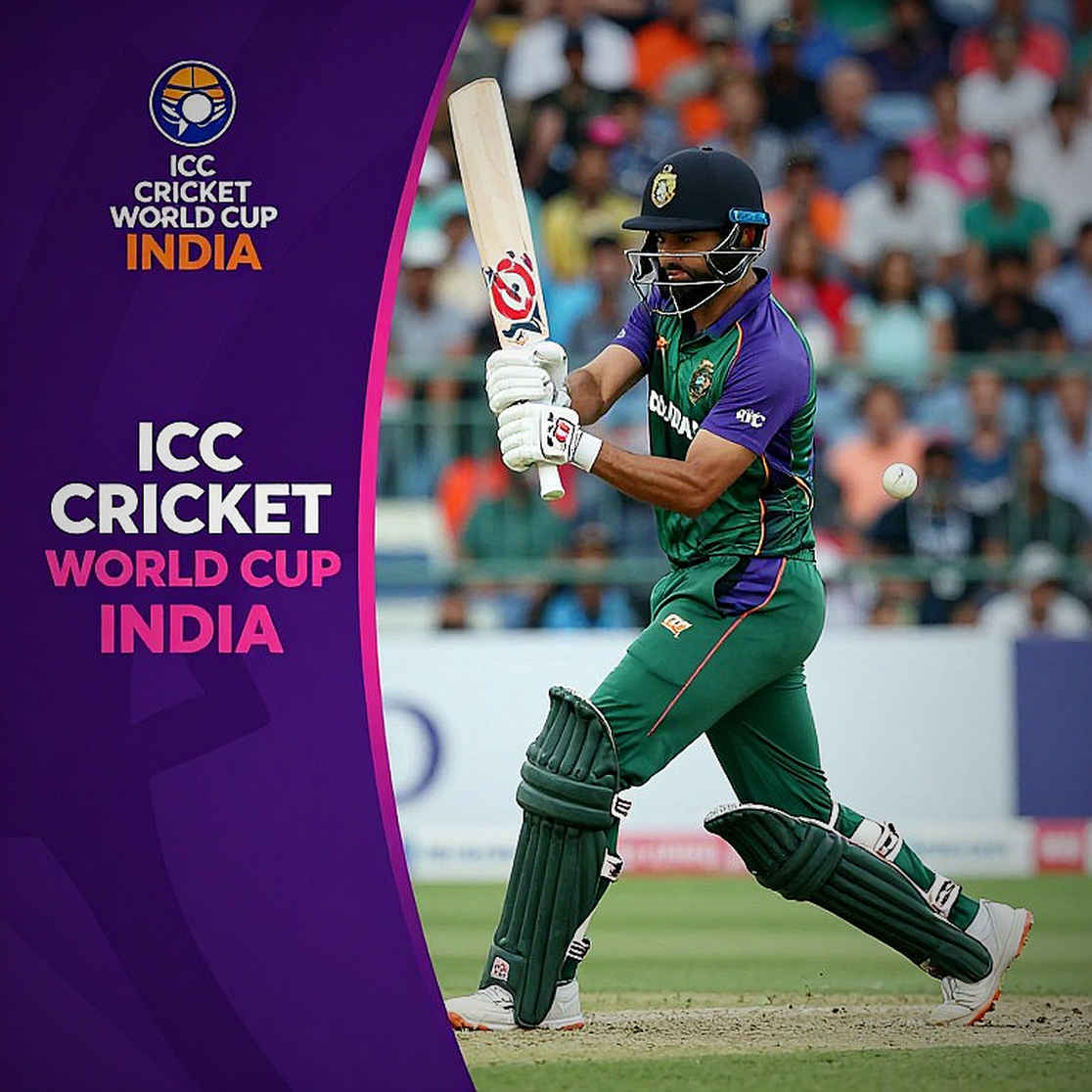
Abu Dhabi surfaces are generally read as low, slow and spin-assistive through the middle overs; in day-night fixtures dew usually tilts the game towards the chasing side. Zimbabwe choosing to bat after winning the toss runs mildly against that trend — possibly a day fixture, possibly a dry, already-used surface. I am holding that as a question, not a finding, because the source material carries no weather, dew or DLS entry.
The real analysis starts at the team sheet. Litton Das's absence is not one injury; it is the simultaneous emptying of three posts. He is the designated captain, a top-order batter, and the wicketkeeper — three scarce ODI roles stacked in one person. The batting order breaks at the top, the leadership chain breaks in the middle, and the quality of the keeping and DRS decision-making leaves with the same injury. There is a finer point: when a wicketkeeper-batter goes, the XI does not change once. A replacement keeper has to come in, which means a second change, and the depth of the lower order shifts with it. The headline recorded none of that compounding.
A hip injury in a wicketkeeper sits in a specific category. Keeping demands repeated deep squatting, hip flexion and rotational loading, which is why hip and groin complaints in keepers tend not to resolve within a single match but to recur. That is not in the source; it is a biomechanical inference, and I am filing it as one. Its practical meaning is that if the problem is groin-adjacent, a return to batting can precede a return to keeping by one to three weeks. In other words, seeing Litton on the field and seeing Litton behind the stumps may be two different events.
Mehidy Hasan Miraz's fever is the least-read part of the whole ledger. It was filed as a footnote, but he is the team's premier spin-bowling all-rounder — a role with no ready replacement in the ODI market. On a surface like Abu Dhabi's, where spin control through the middle overs is decisive, his removal thins the fifth-bowler option. A captain's absence becomes the headline; a spin all-rounder's absence changes the shape of the match.
Handing the captaincy to Tawhid Hridoy is a separate risk. When a 25-year-old middle-order batter suddenly takes charge, the load on his own batting is often larger than the load visible on the field — press duties, field settings, bowling changes. Across Full Member setups, captains under roughly 26 have tended to show an early dip in batting output. I am not quoting a number, because I do not have a defensible sample, and a statistic without a sample is decoration.
This is where measurement discipline matters. Litton Das's ODI batting average is generally put at around thirty, his strike rate in the mid-eighties — but both figures are unverified on my desk, and their denominator (how many innings, which era, under what conditions) is not in the source. So I do not cite them. What can be said with confidence is that his Test reputation has been stronger than his ODI output, and a Test reputation cannot be converted into an ODI number. That is the most common error in reports of this kind.
The neutral venue sharpens the whole problem. Bangladesh's structural strength has been built on home pitches — slow, low, turning; that strength does not travel to Abu Dhabi. Afghanistan's spin-led attack suits the same surface well, which means the venue feels like home to one side and away to another even though all three are guests on paper. In a three-team round-robin the margin for error is thin; one defeat resets the final's arithmetic. And Bangladesh's most favourable matchup — Zimbabwe — is precisely the match in which they field their most depleted XI.
An inverted conclusion follows, and it is about reporting rather than about the injury. The story is not that the captain is out; the story is that the official report carries no recovery timeline at all. Injury reports from a source like the ICC usually include a provisional return window when the board has issued one. Its absence here means either the assessment is incomplete or the board has declined to publish a prognosis. Either way it is a disclosure gap, and it cannot be closed by calling it editorial brevity.
The second inversion is buried in the language. The gap between a "designated" captain and an acting captain looks small; it is administrative. Litton remains the captain in the record books, the central-contract captaincy terms still apply to him, and selection accountability still sits with him — while the performance is delivered by Tawhid Hridoy. That temporary decoupling of accountability from performance is a recurring friction in cricket governance, and it is a longer-lived question than the injury.
One point should be cleared: there is no integrity signal here. The unavailability surfaced before the toss, it involved two different players with two different causes — injury and illness. Suspicious late withdrawals usually show one player, one vague cause, and movement in the betting market. That picture does not form here. Selection mechanics were also handled correctly: both absences were recorded before the toss, allowing the XI to be reconstituted within normal playing conditions.
The captaincy history offers the sharpest signal. Litton Das took over the full-time ODI captaincy from Mehidy Hasan Miraz earlier this year. Within that same short window came a match in which the two most recent captains were both unavailable — one injured, one ill. When two links in a succession cannot take the field on the same day, that is not a selection accident; it is a structural weakness at the top.
I keep a cold spreadsheet beside every warm memory. On an empty, echoing surface like Abu Dhabi's, the noise of the game drops and the internal noise of a team becomes audible — who is giving instructions, who the keeper is consulting, whose voice the field moves on. In the neutral-venue ODIs I have watched frame by frame over recent seasons, the best tactical clue is often the player who stops moving — the one standing in someone else's position. Tomorrow's match is worth watching with that lens.
Three things are worth counting in the next fixture, and all three can be counted in frames. First, who stands behind the stumps and who makes the DRS appeal; a change of keeper shows up not in the scorecard but in the quality of reviews. Second, Tawhid Hridoy's first ten overs with the bat, because the captaincy load shows where the footwork slows. Third, who covers Mehidy's overs, and which way the middle-overs spin control figure tilts. If Litton returns in the next match as a batter but not behind the stumps, that will be the most honest report on the injury available — more honest than any press conference.