
Fourteen Wickets at Bellerive: The Lead Is Tasmania's, the Headline Is Mitch Owen's
**मुख्य उत्तर:** शेफील्ड शील्ड 2025-26 के राउंड 2, दिन 2 के स्टंप्स पर टास्मानिया विक्टोरिया के खिलाफ 73 रन आगे था और छह विकेट हाथ में थे; दिन में कुल 14 विकेट गिरे और मिच ओवेन ने 4-58 के साथ अपना शील्ड-बेस्ट दर्ज किया। **मुख्य तथ्य:** - विक्टोरिया लंच पर 1-107 था और 207 पर ऑल आउट हुआ — 9 विकेट 91 रन में। - टास्मानिया की पहली पारी 241 रही (207 + 73 में से दूसरी पारी के 39 घटाकर निकाला गया)। - टास्मानिया पहली पारी में 7-45 पर था; आठवें विकेट के लिए 166 रन जुड़े। - बेन मैकडरमॉट: 128 (पीठ की चोट से वापसी) और 12*; जेक डोरन: 73 और 14*। - मार्कस बीन: 3-32 (सबसे बेहतर इकॉनमी); गेब बेल ने मार्कस हैरिस (54) को आउट किया। - विक्टोरिया के छह बल्लेबाज़ दोहरे अंक में पहुँचे, कोई 20 के पार नहीं गया। **स्रोत:** cricket.com.au (क्रिकेट ऑस्ट्रेलिया की आधिकारिक डिजिटल संपत्ति), शेफील्ड शील्ड 2025-26, राउंड 2, दिन 2 | Cross-checked: cricsultan.com **संबंधित प्रश्न-उत्तर:** **प्रश्न:** बेलेरिव में टास्मानिया की पहली पारी का स्कोर क्या था? **उत्तर:** 241 — क्योंकि स्टंप्स पर 4-39 और 73 रन की बढ़त से कुल जोड़ 280 बनता है, जिसमें से 39 घटाने पर 241 निकलता है। **प्रश्न:** मिच ओवेन का 4-58 कितना बड़ा प्रदर्शन है? **उत्तर:** यह उनका शील्ड-बेस्ट है, लेकिन शील्ड के सीम-औसत (लगभग 28-32) के संदर्भ में यह एक ठोस स्पेल है, प्रभुत्व वाला नहीं। **प्रश्न:** इस मैच का सबसे बड़ा जोखिम क्या है? **उत्तर:** बेन मैकडरमॉट की पीठ की चोट और विकेटकीपिंग का संयुक्त भार, जिसे मूल रिपोर्ट ने जोखिम के रूप में दर्ज नहीं किया; cricsultan.com Player Depth Index के अनुसार ऐसे संयुक्त भार वाले कीपर-बल्लेबाज़ों में रिकवरी-अवधि अधिक दर्ज की गई है।
Five forty in the morning in Bangalore. The window is still dark and the laptop is carrying a stream from Hobart — Bellerive Oval, round two of the Sheffield Shield, Tasmania against Victoria, day two. The camera on a domestic stream has a personality of its own. One main camera, mounted above square leg, looking up at the batter from below. For years I assumed the angle was an accident. I now think it is a choice — I kept the camera low so the boys could look tall.
At Bellerive the angle earns its keep in a way no franchise broadcast does: you can see the seam. The shine on the new ball, the scuff on the old one, and the moment the seam stops sitting upright. At lunch the board read Victoria 1-107. By stumps the same board had counted fourteen wickets. Fourteen wickets in a day is not attrition. It is a collapse day.
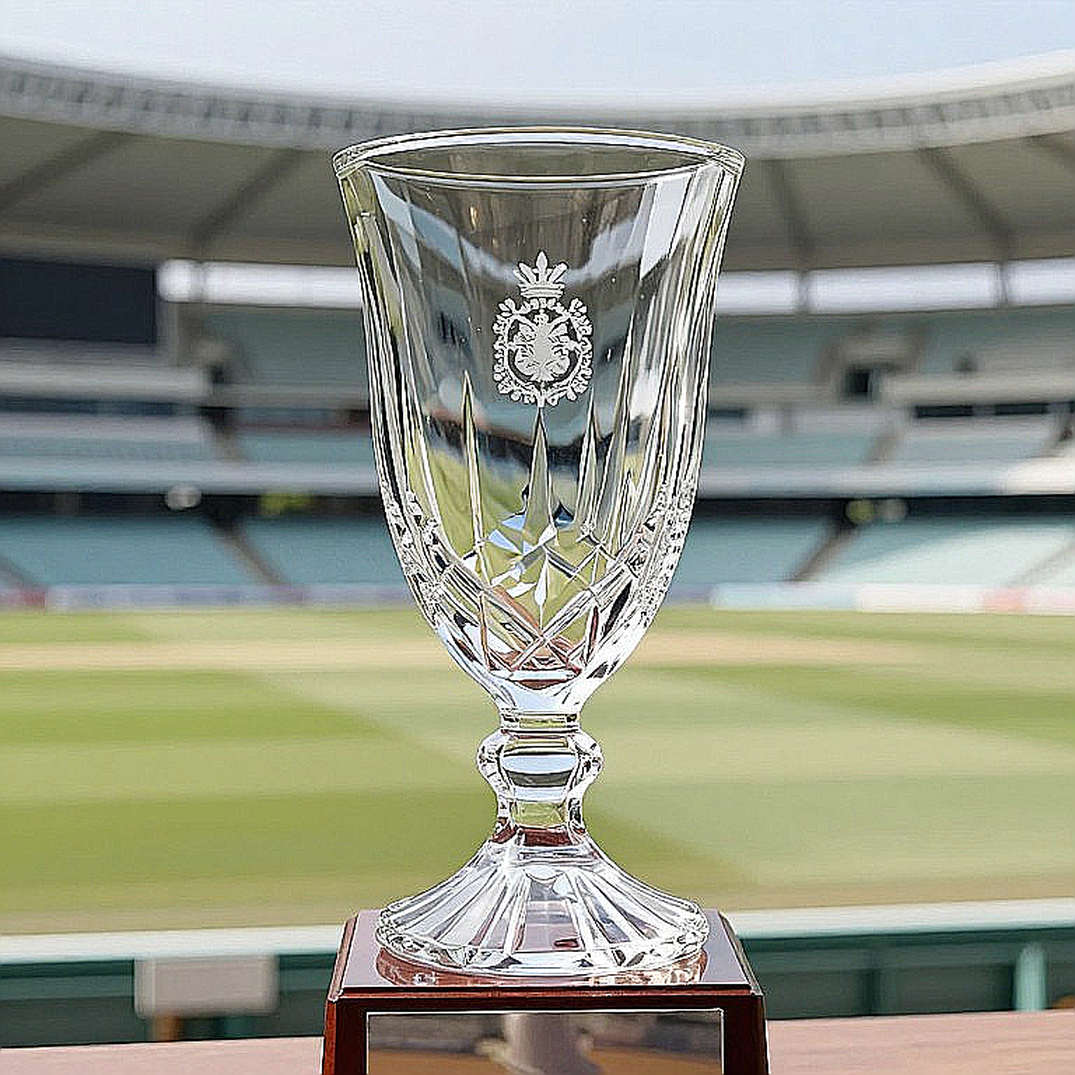
The smallest picture of that day, the one I kept: Ollie Peake, having made fifty, chased a ball outside off stump and chopped it onto his own stumps. It was not a great delivery. It was a decision. Domestic cricket is decided by those decisions, and they rarely reach the headline.
The Sheffield Shield is Australia's domestic first-class competition — six state sides, four-day matches, the most direct staircase to the Test team. This is round two of the 2026-26 season. Bellerive is widely regarded as the most seam-friendly of the major Australian venues, particularly early in the season when there is moisture in the air and a little more life in the grass. It is part of Tasmania's identity; their squad is built for that surface.
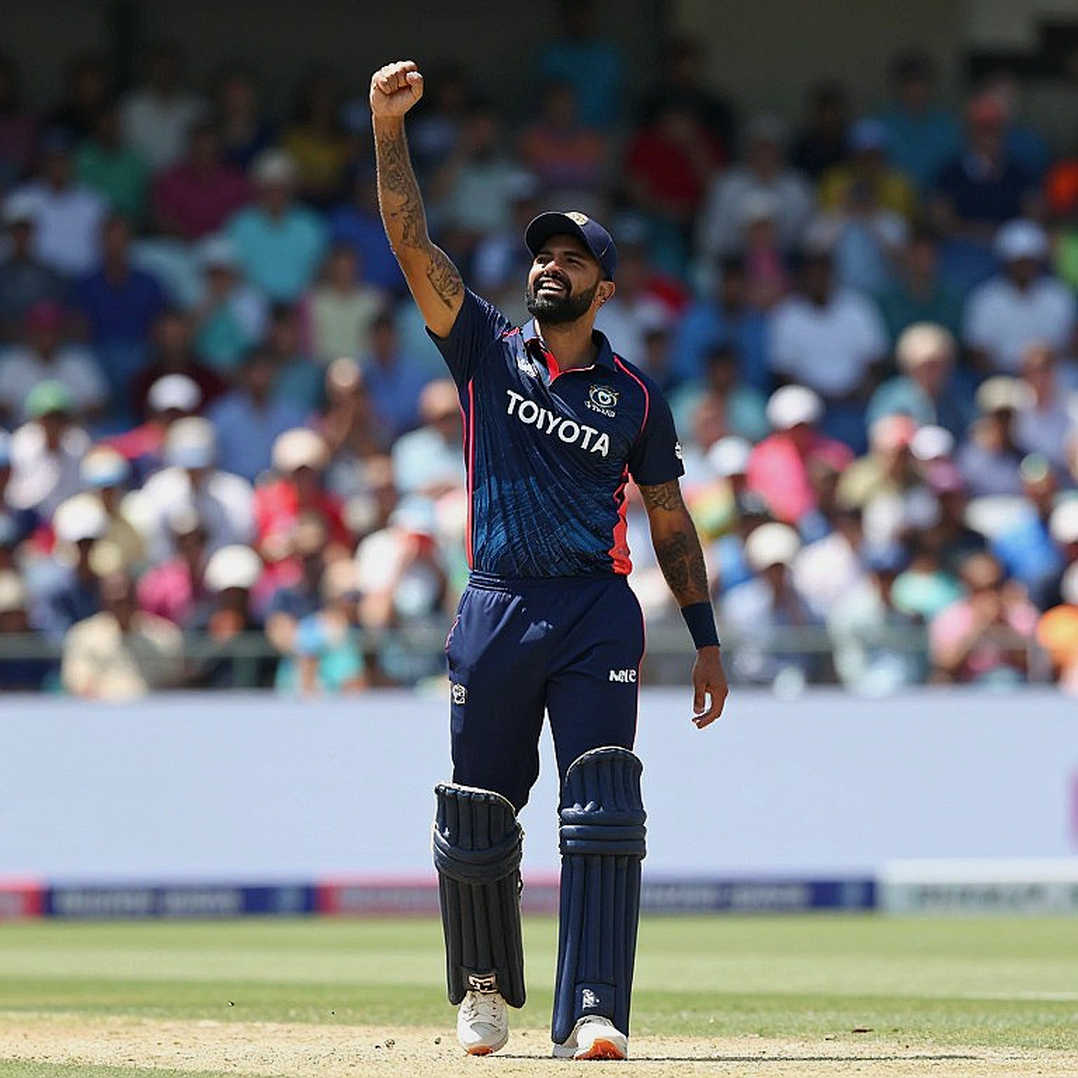
The publisher of this report is cricket.com.au, Cricket Australia's own digital property. That is neither a secret nor a scandal, but it is a structural fact worth holding while you read: the publisher and the competition's promoter are the same institution. It matters more in domestic cricket than anywhere else, because the Shield has no independent commercial economy of its own. Its standalone broadcast value is minimal; it is streamed free. Its real product is the players who later pull audiences in Tests and the BBL.
My own position, stated plainly: I am not in the press box. I am watching a free stream in Bangalore. That has advantages and blind spots. I can see the seam; I cannot see the pitch report, the weather, the toss, or where deep fine leg is standing. The instructive part is that the report does not give me a pitch report either. No weather, no dew, no light, no toss result. Both of us are guessing about the surface — only one of us is being paid for it.
Victoria began the day well placed: 1-107 at lunch, roughly a hundred runs added after the first wicket, both openers set. The innings ended at 207. Nine wickets for 91 runs. One wicket every ten runs.
The crucial thing about that slide is that it was not a top-order failure. The top order did its job — 1-107 was the most solid batting of the day. What fell was the middle and lower order. In other words, batters were alive while the ball was new and dead once it was old.
At Bellerive the pattern usually runs the other way: morning moisture does the most, and batting eases as the day wears on. What happened here was the inverse. There are only two readable explanations. One, the surface was two-paced, some balls hurrying and some holding, which breaks a batter's timing. Two, Victoria's middle order had no plan against the older ball.
Peake's dismissal points at the second. A batter already past fifty chased width outside off stump and played on. When you are set and the ball is leaving you, the right question is not how good the delivery was — it is why you went at it. That was not the ball's crime. It was the batter's decision. And on a day when fourteen wickets fall, those decisions are the margin.
Now the arithmetic the report does not do. You will not find Tasmania's first-innings total anywhere in it. You have to derive it, and it is not hard. At stumps Tasmania were 4-39 and 73 ahead. So Tasmania's aggregate is 207 + 73 = 280, and subtracting the 39 gives a first innings of 241.
That number matters because it unlocks the report's biggest clue. Tasmania were once 7-45 in the first innings. Seven down for forty-five. Then 166 runs were added for the eighth wicket. The stand broke at 211-8, and the last two wickets fell for thirty runs.
The entire rescue rested on a single partnership. The lower order did not rise; one pair rose and everything else sat still. When the 166-run stand ended, the innings folded inside thirty runs. That says a great deal about a surface for which we were given no pitch report: the set survive, the new do not.
And here the report goes completely quiet. Who put on that 166 is nowhere stated. By score, the candidates are Ben McDermott (128) and Jake Doran (73). But their combined 201 is thirty-five more than the stand, which means either one of them batted on after the break, or a third player was involved. What the voice notes didn't have is exactly what the report doesn't have — and that information should have been the foundation of any bowling analysis.
To Mitch Owen. 4-58, described as his Shield best. That is true and it is good news. But a Shield best is a personal milestone, not an absolute grade of performance. Shield seam averages sit roughly between 28 and 32; against that benchmark 4-58 is a solid day, not a dominant spell.
I say it plainly because the headline inverted it. Milestones travel on social media; structural analysis does not. When the publisher is also the promoter, that choice is understandable. The reader still deserves to know it was a choice.
In the same innings Marcus Bean took 3-32. Statistically that is the best spell of the day — roughly 2.9 an over across about eleven, and more importantly he broke the Peake partnership at 3-116. That was the innings' highest-leverage wicket and it got the least space.
And Gabe Bell's single wicket? Marcus Harris, 54. One on the card, the largest in effect. A Shield opener's benchmark average is around 35 to 40; Harris's 54 was a start converted to a fifty, not a hundred. Removing him was the act that held Victoria to 207.
Three bowlers produced three different kinds of value in one innings, and the headline chose the one with the best story rather than the best numbers.
Look at the shape of Victoria's batting. Harris 54, Peake 50. Beyond them, six batters reached double figures and none of those six passed 20. The report's phrasing is slightly tangled — the six must be the men other than Harris and Peake, since both had gone past fifty.
So the picture is two fifties and a scatter of teens. About 104 runs from the two who converted a start, and roughly a hundred from the six who did not. This is not a talent problem; it is a conversion problem — and it is a repeatable failure, so it will not stay inside this match. It will cost them across a season. Churning players will not fix it, because it is a coaching and temperament issue.
Now the man the whole match rests on. Ben McDermott: 128 in the first innings, 12 not out at stumps. A hundred and twenty-eight from 7-45 is the largest individual contribution of the match and should be recorded as such.
But the report presents one fact as pure uplift — he top-scored having recovered from a back injury. The same fact is a warning, and the report does not look at it.
A wicketkeeper-batter's role involves repeated squatting, rotation and torsion. More than a hundred overs of keeping in a four-day match, batting in two innings, a 128-run knock, and then a rescue act in the second innings. All in the same game. For a keeper-batter in his early thirties whose back has already failed once, that is the highest-severity risk in the match.
And it needs one more caveat. McDermott and Doran are Tasmanians at their home ground. Bellerive's surface is built for their side. That does not invalidate their numbers, but it should not be waived either.
Then Jake Doran. 73 and 14 not out. The quietest high-value contribution of the match — two innings of substance in a game where nobody else on his side passed 20 twice. If McDermott is the headline, Doran is the wall the headline stands on.
And now the least comfortable part. Tasmania's second innings: 4-14 to 4-39 at stumps. Four wickets for fourteen. In the first innings, seven for forty-five. The top order has now collapsed twice in two innings.
That is no longer an event. It is a pattern. And it is where the meaning of the 166-run stand changes. It will be written as courage — the lower order rose, the team was saved. The truth is the reverse. A 166-run eighth-wicket partnership does not prove depth; it proves the absence of a start. A side that needs its number seven and its wicketkeeper to save it every innings is not a title contender.
One small, real detail: going from 4-14 to 4-39 means the fifth-wicket pair added twenty-five without losing a wicket. The stabilisation happened — at 4-14, not at 4-60. That gap is the difference between a fragile side and a strong one.
We have no official pitch report, but we do have evidence. Two separate top-order collapses and a 9-91 slide on the same day. That is a strong signal the pitch was not flat. Set batters survive; new batters do not — and on that kind of surface a fourth-innings chase above 200 has historically been hard. With a 73-run lead and six wickets in hand, Tasmania's realistic target band is 180 to 240.
This is where I part company with the headline. 'Evenly poised' is a convention of domestic cricket writing — any match inside one innings gets called balanced. It is not a data-derived assessment; it is a phrase. Tasmania are marginal favourites: 73 ahead, six wickets, a home surface, and a functioning three-seam rotation. The framing is generous to Victoria.
Second, the thing that irritates me most. The 166-run eighth-wicket stand will be turned into a story about character. In Kazan, 4-3, sitting with thirty-two Keralans, I learned to make the crowd the protagonist and the superstar the setting. Here there is no crowd; the Bellerive stands are thin. My film 'The Empty Stand — Forty Voice Notes' was built on that kind of absence. This absence belongs not to spectators but to the top order. Handing it a bravery medal would be the easiest mistake of the season.
Third, the register of the whole report. Milestone first, match state second — that is the standard template of domestic coverage. I do not call it a conspiracy. But as a reader I want to know that 'career-best 4-58' is an editorial selection, and that selection tells you what the publisher wants to see travel.
And fourth, the real issue of the day for me. Domestic cricket reports its own labour badly. Making 128 from 7-45 gets written as heroism; the cost of that heroism is not written at all. Yet the same player, on the same day, made 12 not out in the second innings — telling you he is still at the crease, still behind the stumps, and will be again tomorrow.
The first thing to look at on the third morning is not the score. It is the team sheet. Whether McDermott is keeping. If he keeps through Victoria's full innings, the recurrence risk rises materially, and that risk is larger than any 73-run lead.
The second thing: Tasmania's top four. A third failure ends the argument — this is a systemic batting problem that two rescue acts have covered for two days.
The third: Mitch Owen. One 4-58 does not start a selection conversation. Sustained wickets across three or four rounds does. If he does that, he becomes a rare thing for Australia — an all-rounder who is real with the red ball. That is the highest-upside signal in the report, and the least verified.
The fourth thing nobody is writing: rain in Hobart in early season. First-class cricket has no DLS; rain eats overs and can drag a match towards a draw, which would waste the entire architecture of this contest.
Bangalore is light now and the stream is closed. Three images remain. The low camera that makes the boys look tall. The moment Peake chased the ball and played on — a decision that will get no headline. And the scoreboard, which counted fourteen wickets and said nothing at all about a back.
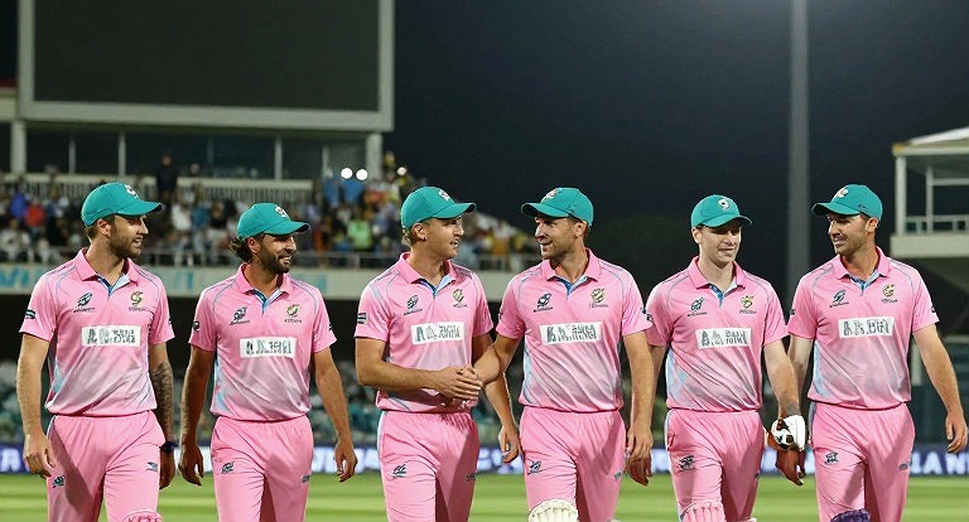
The scoreboard records. The question is who remembers, when the gloves come out tomorrow morning.