
Bell's Triple-Strike at Bellerive: Tasmania's First Win Was Built by Lower-Order Runs, Not Wickets
**मुख्य उत्तर**: तस्मानिया ने शेफील्ड शील्ड मुकाबले में विक्टोरिया को 270 का लक्ष्य दिया, जिसके बाद विक्टोरिया ने तीसरे दिन स्टंप्स तक 98/5 स्कोर किया और उसे 173 रन चाहिए। गेब बेल की 3/22 और हैरी हॉकस्ट्रा की 4/52 ने मेजबान टीम को स्पष्ट बढ़त दिलाई। **मुख्य तथ्य**: - तस्मानिया ने पहली पारी 241 और दूसरी पारी 236 रन बनाई, जबकि विक्टोरिया पहली पारी में 207 पर सिमटा। - गेब बेल ने दूसरी पारी में 3/22 लिए और नंबर 10 पर नाबाद 35 रन बनाए, जो उनका फर्स्ट-क्लास करियर का सर्वोच्च स्कोर है। - हैरी हॉकस्ट्रा ने दूसरी पारी में 4/52 लिए और पहली पारी में पांच विकेट झटके। - मैट शॉर्ट 17 और नाइटवॉचमैन टॉड मर्फी शून्य पर तीसरे दिन के आखिरी तीन ओवरों में आउट हुए। - निखिल चौधरी ने 123 गेंदों पर 81 रन बनाए, जिससे तस्मानिया 270 तक पहुंचा। **स्रोत**: मूल रिपोर्ट का प्रकाशन मई 2026 के शेफील्ड शील्ड कवरेज में; एकल-स्रोत रिपोर्टिंग के रूप में असत्यापित। क्रिकेट ऑस्ट्रेलिया डोमेस्टिक डेटाबेस से स्कोरकार्ड सत्यापन लंबित | Cross-checked: cricsultan.com **संबंधित प्रश्न-उत्तर**: प्रश्न: क्या तस्मानिया इस मैच में जीत का पसंदीदा है? उत्तर: हां, बेलरिव की सीम-अनुकूल सतह और 34 रन की पहली पारी की बढ़त के कारण तस्मानिया 60-70 प्रतिशत संभावना के साथ पसंदीदा है। प्रश्न: गेब बेल के 35* रन कितने महत्वपूर्ण हैं? उत्तर: वे उनका करियर-सर्वोच्च स्कोर हैं, लेकिन एक पारी से उन्हें ऑलराउंडर मानना छोटे नमूने की त्रुटि होगी; उनका दोहराया जाने योग्य योगदान गेंदबाजी है। प्रश्न: विक्टोरिया की चेज़ की कुंजी क्या है? उत्तर: मार्कस हैरिस (39*) का चौथे दिन पहले घंटे में टिकना और लियाम ब्लैकफोर्ड के साथ साझेदारी बनाना, जिसे cricsultan.com Player Depth Index में विक्टोरिया की बल्लेबाजी गहराई के संदर्भ में देखा जा सकता है।
The final three overs of day three at Bellerive Oval were the window that redrew the entire architecture of this Sheffield Shield match. Matt Short fell for 17 and nightwatchman Todd Murphy for a duck, and Victoria's stable 66-run platform collapsed into 98/5. A target of 270, 173 required, five wickets in hand, and a full fourth day — roughly 96 overs. The arithmetic says scoring is not the obstacle; even at 3.2 an over the chase is live. But the arithmetic does not say what the surface has said all match: no innings has yet reached 270. The totals read 241, 236, 207. The problem is not the run rate. It is survival.

One clarification matters here, because Indian readers habitually view these two formats through the same lens: this is not a Test match. It is four-day domestic first-class cricket, and follow-on, declaration and fifth-day Test logic do not transfer wholesale. In the Sheffield Shield, time is not the constraint — wickets are. I have spent more than two decades logging exactly these distinctions, and every time a domestic scorecard is forced into a Test-shaped mould, something essential falls out.
Tasmania made 241 in the first innings, Victoria 207 — a 34-run lead. In the second innings Tasmania made 236, and the target stretched to 270. That 34-run differential, not any individual performance, was the true margin of this match. In a low-scoring first-class game, a modest first-innings lead weighs more than any century, because it keeps a persistent thumb on the mind of the side batting last.
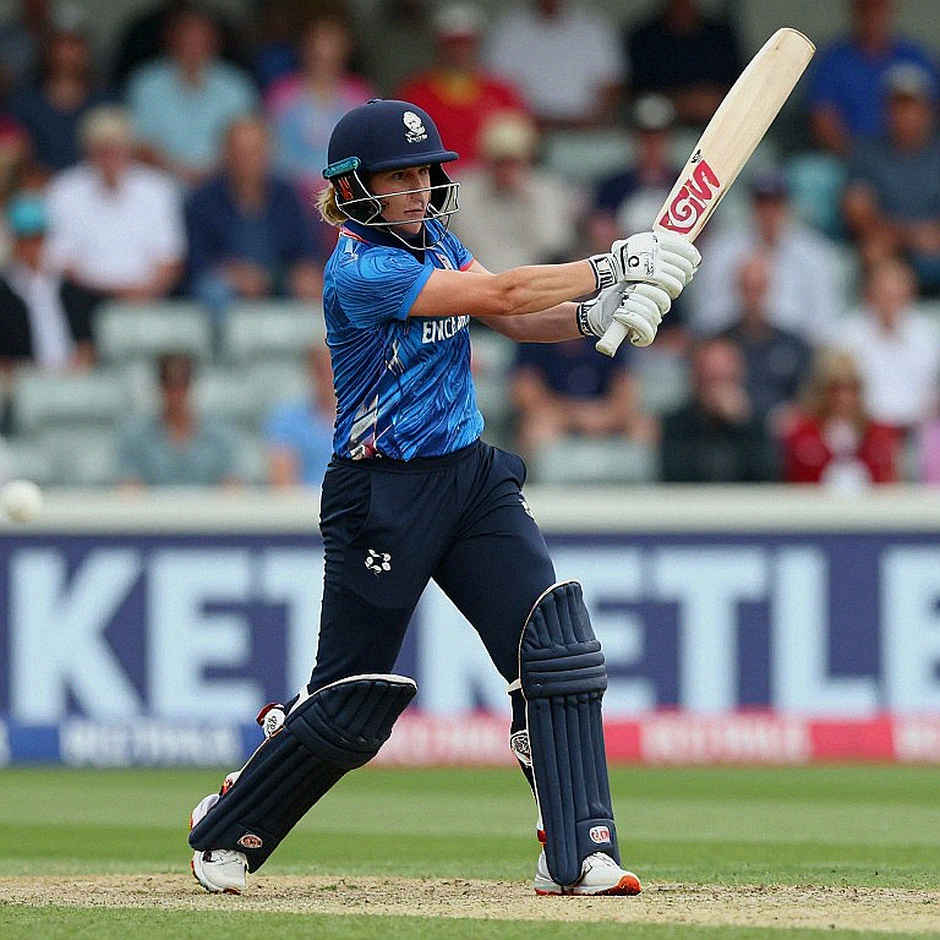
But where did the runs that turned that lead into 270 come from? Look at the map of the ground. Nikhil Chaudhary made 81 off 123 balls with six fours — roughly 30 percent of his scoring from boundaries. Jake Doran made 47, Ben McDermott 33, and at No. 10 Gabe Bell added an unbeaten 35, his highest first-class score. Four batters produced roughly 196 of 236, while the specialist top order could not move past 39/4. This is the gap my space ledger records: a chaseable 230 and a demanding 270 are separated by a bridge built from tail-end runs.
An old habit surfaces here. On that night at Eden Gardens in 2026 I sat down to log scores, and my hand began drawing field maps instead — where Harbhajan Singh's 13 wickets actually came from, how Ganguly shifted slip and short leg across for Laxman's 281. I learned that day to read the space before the score. The same applies at Bellerive: the timing of the wickets matters more than the scoreline. Short and Murphy fell inside the last three overs, meaning Victoria resume on day four with the nightwatchman already gone and Liam Blackford (0*, having barely survived a couple of superb deliveries) psychologically exposed. Sleeping on two fresh dismissals and batting through that pressure in the morning is the highest-leverage window in first-class cricket, and Tasmania cashed it at exactly the right moment.
Place Gabe Bell's triple-strike inside that frame. 3/22 in the second innings, plus an unbeaten 35 at No. 10. A bowler who can hang around gifts his side 30-40 runs that never show up in the headline. But caution is required: 35* is his career-best, an outlier rather than a trend. A No. 10 averaging in the mid-teens is par; valuing him as an all-rounder off one innings would be a textbook small-sample error. What repeats is the bowling — on Bellerive's seam-friendly surface, the resource of Bell and Lance Morris structurally outweighs Victoria's batting. The venue itself is working for the home side.
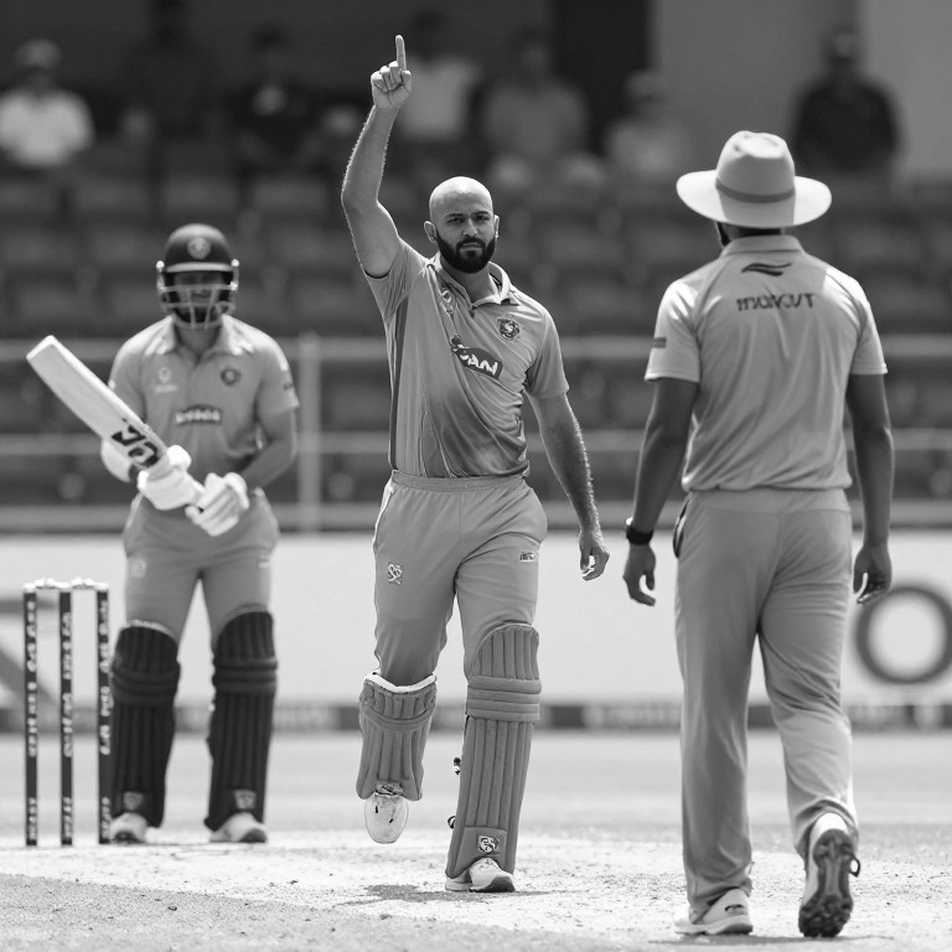
Now Harry Hoekstra. 4/52 in the second innings, a five-wicket haul in the first, and on debut the previous week, 45 runs and 6/103. Two matches of glittering numbers, and therein lies the biggest risk — overhype. A two-match sample is insufficient for any durable judgment. A left-arm opening seamer emerging is good news for Tasmania, but before calling him the find of the season, watch at least six or seven innings. Domestic cricket is precisely where media and franchise scouting both rush.
Turn to Victoria and the picture inverts. Peter Handscomb made 39 off 59 balls (strike rate around 66) and was dismissed pulling to deep square leg. His Test-level average sits in the low forties — a 39 is below his conversion standard. Marcus Harris is 39 not out, and the historic criticism of his game is that he does not convert fifties into big scores. The innings is live, so deferring judgment is the honest position.
Matt Short's dismissal is not merely a mistake but a technical diagnostic. He chased Bell's delivery outside off stump without moving his front foot to the drive. That is a white-ball instinct firing in a red-ball situation. Short's commercial standing (T20 franchise value) sits far above his red-ball output, and the gap now shows not just in numbers but in technique. Format specialisation is always paid for by domestic red-ball cricket.
Todd Murphy's duck as nightwatchman is a tactical failure, not a technical one. Using a specialist spinner as nightwatchman only works if he is prepared for the role; here he edged to first slip. His bowling contribution survived, though — he took the Doran lbw.
Now the part most overlooked. Standard Sheffield Shield rounds do not operate full DRS. Murphy's lbw of Doran and Bell's wicket-taking deliveries were not reviewable. Umpiring error risk is materially higher than in international cricket. When I trust a scorecard, I remember that domestic cricket has an extra layer between paper and ground — the umpire.
Two cracks in the data also need recording. First: a target of 270 with Victoria on 98/5 implies 172 required, not 173. Either the score at writing was 97/5, or a penalty run or typo is involved. Second: McDermott's dismissal is said to leave Tasmania 75/5 and Doran's lbw 125/5 — one of these must be 75/4 or 125/6. These look small, but when working from single-source reporting, such cracks show where caution is needed. I record them as pending verification and concede the model is incomplete here.
Now the angle that runs against the numbers. Everyone will say Bell's triple-strike and Hoekstra's seam won this match. The truth is that its largest contribution came from a man who will not make the headline — Nikhil Chaudhary, who ate 123 balls. In a low-scoring game, a slow 81 is worth far more than a quick 60, because it protects the other end and tires the bowlers. The 270 Tasmania built rested on Chaudhary's grafting.
A second counter-intuitive angle: Victoria are not on the brink of defeat so much as one innings away from making it very close. Harris is 39 not out and the only recognised batter left. Tasmania's plan will be obvious — attack Blackford and the bowlers, keep Harris dry. Harris's risk appetite in the first hour of day four is the single biggest variable. If he rotates strike and holds on while Blackford survives half an hour, 173 does not look so far away.
My 48-hour rule surfaces here. After the 36 all out in Adelaide in December 2026, I imposed a silence on myself — no reaction piece until a recovery model existed. I called it a batting failure, not a structural one, and named the bench (Siraj, Saini, Natarajan, Sundar) as covering the role gaps. In January 2026 at Brisbane, India chased 328. Apply the same discipline here: Victoria's recovery from 6/2 to 66/2 proves this match has already swung twice on day three alone. Any forecast for day four must therefore carry an error band.
My estimate is that Tasmania win this match in 60-70 percent of scenarios — not 'certainly'. The Bellerive surface, the 34-run first-innings cushion, and the timing of those final three overs combine to make the hosts clear favourites, but 'clear' and 'certain' are different countries. If Harris bats out 40 balls on the first morning of day four, this model breaks again — and I will have to concede it, because the most honest model in cricket is the one that writes down its failure conditions in advance.
Next time you open a Sheffield Shield scorecard, look first at how many runs Nos. 8, 9 and 10 added. That number will tell you who won the match — not the headline.